

Higher Education
New Presidents, New Playbooks: What Two Leadership Transitions Say About Higher Ed’s Future

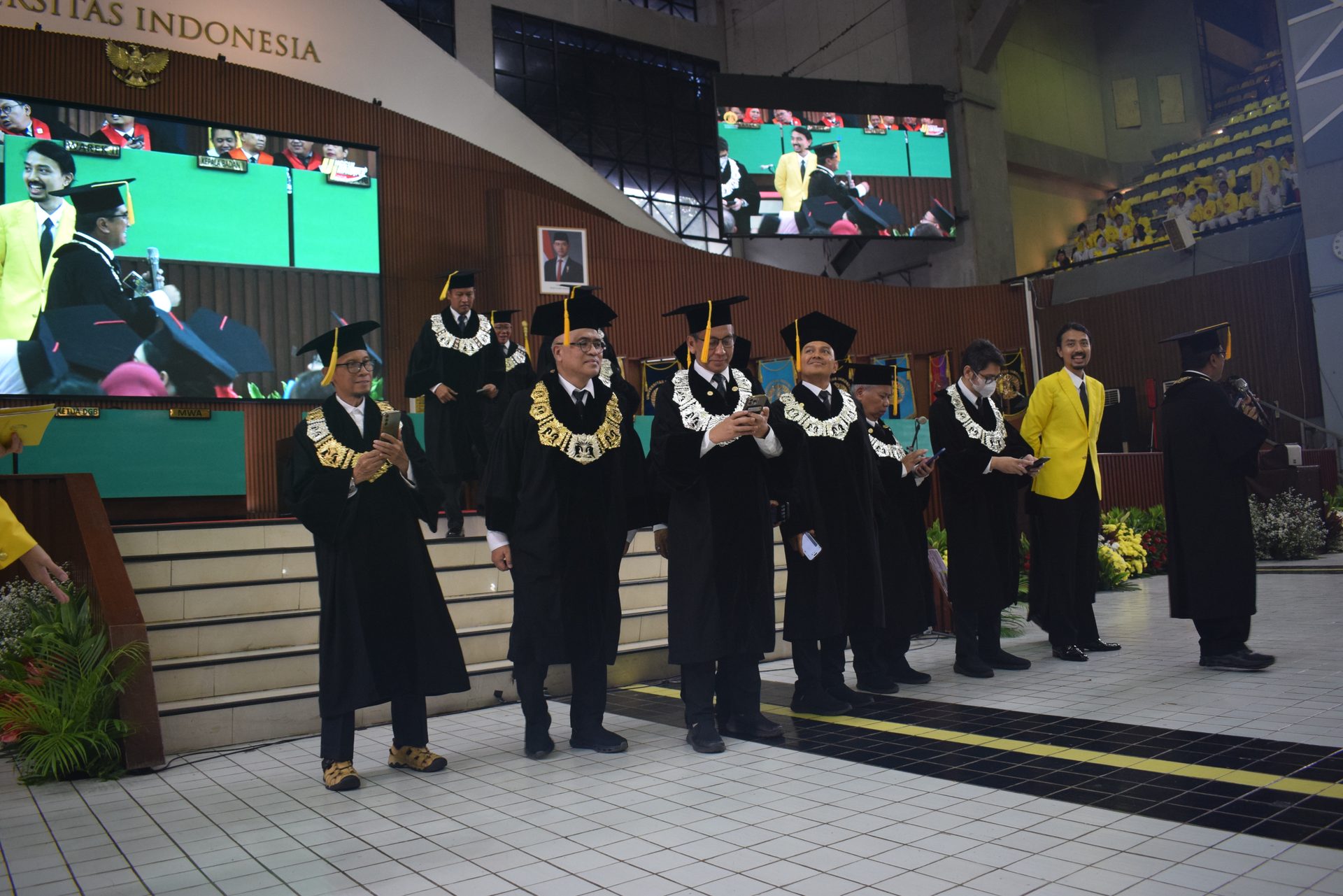
Subheadline: An enrollment-builder takes the helm at Jessup. An accreditation veteran steps up at Aspen Group. Boards are hiring for the crisis era — and the pattern is unmistakable.
On October 7, 2026 — yesterday — Jessup University inaugurated Dr. Meghan Simpkins as its seventh president. Two weeks earlier, Aspen Group named Dr. Jennifer Billingsley president of United States University and Aspen University. Two institutions, two searches, two very different corners of American higher education — and the same underlying message about what boards now want in a president.
The enrollment-builder
Simpkins arrives at Jessup with the credential every struggling university covets: a growth record. As provost and senior vice president at Southeastern University in Florida, she helped lead the academic enterprise through a period in which enrollment grew from approximately 6,000 students to more than 14,000, spanning 34 states and four countries — growth powered substantially through partnerships with churches and Christian organizations.
Her inauguration, themed "Rooted in the Word. Ready for the World," framed the challenge in the language of mission rather than metrics: "We need to continue serving our traditional students well. But it's time to open the doors wider." Her three stated priorities — access, fidelity, partnership — are a blueprint for the faith-based sector's central dilemma: how to grow without diluting identity. At Jessup, an 87-year-old institution, she plans to explore new educational and financial models designed to make a Christ-centered education available to more students.
The subtext is the sector's open secret. Small private universities face the demographic cliff, price sensitivity, and the slow erosion of the residential model. Boards are no longer hiring caretakers of tradition; they are hiring builders who have demonstrably grown something before.
The accreditation veteran
Billingsley's appointment tells the other half of the story. Where Simpkins is the external growth hire, Billingsley is the internal steady hand: more than 20 years in academic leadership and clinical practice, eight of them inside Aspen Group, rising from Dean and Professor of the College of Nursing and Health Sciences — where she launched the university's first doctoral program and supported its nursing accreditation — to Provost and Chief Academic Officer, and now to the presidency.
Her mandate is consolidation, not expansion. Aspen Group CEO Matt LaVay was explicit: Billingsley's deep knowledge of the institutions' academic programs, accreditation standing and students makes her suited "to lead them through their next phase, including the pending merger of AU into USU." In other words, her job is to land a complex institutional merger without breaking accreditation, alienating faculty, or losing students — the unglamorous, high-stakes operational work on which for-profit and online institutions live or die.
The sectors they represent
The two appointments also spotlight the two segments of American higher education where leadership turnover is most consequential right now.
The first is the faith-based private college — hundreds of small institutions facing the same arithmetic: a shrinking pool of traditional-age students, families questioning the price of a residential degree, and competition from public flagships and online giants. Simpkins' playbook at Southeastern — partnerships with churches and Christian organizations as a distribution channel for enrollment — is one of the few growth strategies proven to work at scale in this segment. Her move to Jessup is a bet that the model travels: that access and fidelity are not opposites, and that a university can widen its doors without losing its soul. If she succeeds, expect her three priorities — access, fidelity, partnership — to become the template for presidential job descriptions across Christian higher education.
The second is the online and career-focused university, where Aspen Group operates. These institutions live under a different kind of pressure: regulatory scrutiny, accreditation cycles that can make or break the business, and the operational complexity of serving working adults at scale. Billingsley's elevation from provost is the classic insider succession — the board choosing the person who already knows where the accreditation risks sit and how the merger mechanics work, rather than an outsider who would need a year to learn the terrain. In a segment where a single adverse accreditation action can be existential, that choice is rational — and it is becoming the norm.
The pattern
Read together, the two appointments describe the presidential job description of 2026. Boards want operators, not orators. The prized CV lines are enrollment growth under pressure (Simpkins), accreditation navigated successfully (Billingsley), mergers managed without mission drift, and financial models redesigned rather than merely defended.
It is a marked shift from the era when presidencies went to distinguished scholars or prolific fundraisers. Scholarship still matters; fundraising still matters. But in a sector facing enrollment cliffs, funding crises, regulatory pressure and technological disruption simultaneously, the scarcest leadership commodity is the executive who has already steered an institution through one of those storms — and can prove it with numbers.
For trustees beginning their own searches, the signal from Rocklin and Phoenix is clear: hire the person who has done the hard thing before, not the person who describes it best. And for sitting presidents, the message is equally direct — the builders and the consolidators are the ones getting the call. Everyone else should be asking what their own record proves.
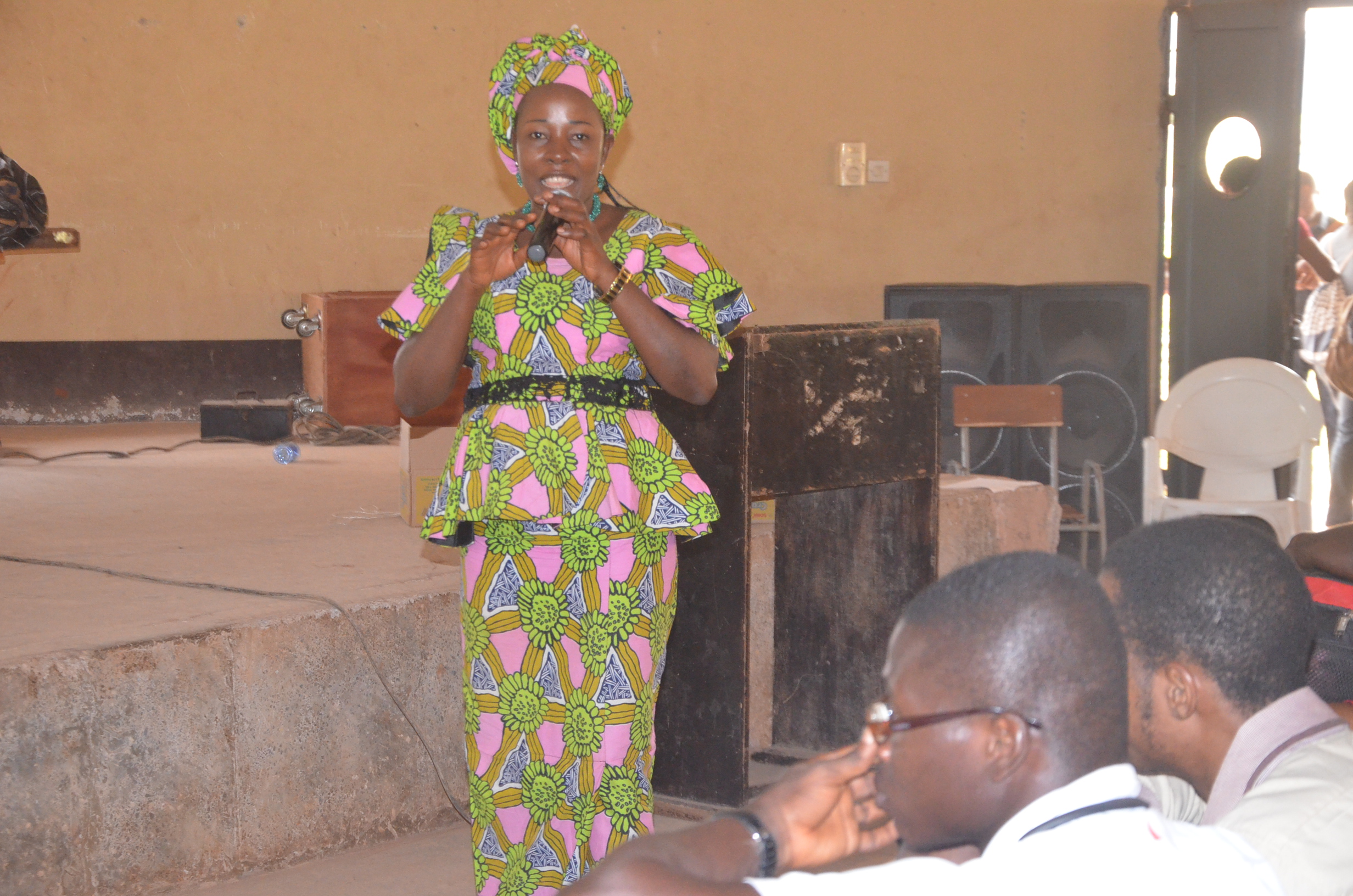
Subheadline: Applications opened in September for the University of Datcha, designed from scratch around agroecology, biomedical technology, and land governance. Across Africa, the university-building boom is accelerating.
On September 14, 2026, Togo did something most countries only talk about: it opened applications for a brand-new public university, designed from a blank page for the economy its graduates will enter.
The University of Datcha, about 130 kilometers north of Lomé, will welcome its first students for the 2026–2027 academic year. It is Togo's third public university, and its founding prospectus reads less like a traditional institution than like a national development plan: initial programmes in economics, agriculture, environmental studies, technology and innovation, with a stated ambition of accommodating up to 30,000 students by 2040.
A curriculum drawn from national needs
What distinguishes Datcha is how deliberately its academic architecture maps onto Togo's economic realities. The university is organized into three units, each aimed at a strategic sector.
The Faculty of Economic, Social and Territorial Sciences (FaSEST) will offer programmes including economic analysis and strategic intelligence, strategic management, healthcare organization management, land governance and security, and territorial intelligence and geodata — disciplines for a country managing rapid urbanization and land pressure.
The Institute of Agricultural and Environmental Sciences (ISAE) targets the sector that employs most Togolese: agroecology and resilient crop production, livestock and sustainable pasture management, agricultural mechanization, agribusiness management, and sustainable forest management.
The Institute of Technological Sciences and Innovation (ISTI) is the most striking of the three, offering biomedical instrumentation and maintenance, agricultural equipment and ecotechnologies, and — remarkably for a new West African university — nuclear science and technology.
University president Professor Essohanam Batchana signed the application notice himself, an appropriate gesture for an institution whose first cohort will define its culture. The message to prospective students is clear: this university was built for the jobs that exist and the industries Togo wants.
A continent building at speed
Datcha is not an isolated project. Across Africa, higher education is expanding at a pace unseen in decades — through public investment, private capital, and post-conflict reconstruction alike.
In Libya, the University of Benghazi — the "Mother of Libyan Universities" — officially reopened on September 4, 2026, after more than eleven years of closure following the destruction of its campus. Rebuilt in just three years, the integrated university city now serves an institution of nearly 100,000 students, with faculties of engineering, arts, law, science and languages restored alongside the central library, laboratories and student residences.
In South Africa, the private sector is driving the boom. STADIO, the JSE-listed education provider, opened its R300 million-plus Durbanville campus in Cape Town — its seventh campus, with capacity for 4,000 to 5,000 contact-learning students across 20 qualifications — welcoming its first cohort in February 2026. Rival Advtech, Africa's largest private education provider, reported operating profit above R2 billion for the first time, having completed mega-campuses in Sandton and Nelson Mandela Bay that began operating in January 2026, with another campus under development in Durban.
And the public pipeline continues: South Africa's Higher Education Minister Buti Manamela has set targets to enroll the first students at a planned University of Ekurhuleni, with the February 2026 budget indicating willingness to fund the infrastructure and a steering committee being appointed to drive the project — explicitly oriented toward science and innovation aligned with the region's industrial economy.
The leadership lesson
For education leaders, the African university boom carries a design lesson that travels well beyond the continent. Too many new universities worldwide are founded as prestige projects — replicas of ancient models, competing on rankings from day one. Datcha, Ekurhuleni and their peers are being founded as economic instruments: their programme portfolios read like industrial policy, their locations chosen for regional development, their scale planned in decades.
That approach has risks — narrow vocationalism, political interference in academic choices, the temptation to promise 30,000 students before the faculty exists to teach them. But it also has a clarity of purpose that many older institutions have lost. When Togo's first Datcha cohort walks into its lecture halls this academic year, they will be attending a university that knows exactly why it exists. How many of the world's universities can say the same?
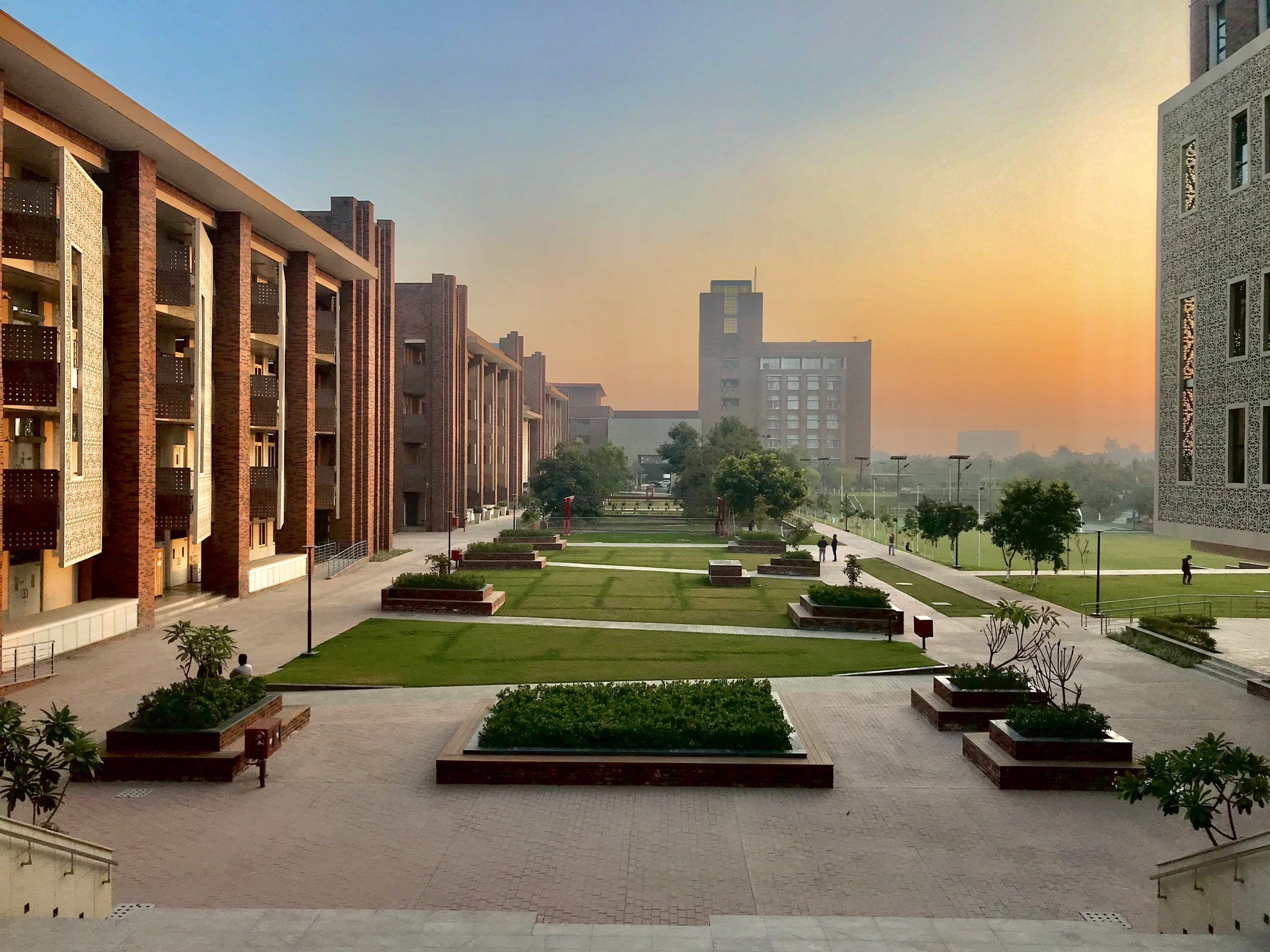
Subheadline: Liverpool in Bengaluru, UNSW teaching since August, Western Australia opening in Mumbai this month. India's experiment with foreign branch campuses has moved from policy paper to crowded reality.
For decades, the dream of a foreign degree meant a one-way ticket: London, Melbourne, Toronto, New York. In the autumn of 2026, that geography is being redrawn — because the universities are coming to the students.
August and September have brought a cascade of openings. UNSW Sydney — ranked 19th in the QS 2027 rankings, the highest-ranked foreign university with an India campus — began teaching at its Bengaluru campus on August 10 with around 200 students. The University of Liverpool is opening its Bengaluru campus, the first foreign branch campus in that city, with undergraduate and postgraduate intakes from this term. On September 18, the University of Western Australia opens its Mumbai campus, the first in India from Australia's prestigious Group of Eight. They join Deakin University and the University of Wollongong, both operating at Gujarat's GIFT City, and the University of Southampton at Gurugram — the first foreign university to open under India's UGC regulations.
Behind them, the pipeline is full: five universities hold formal UGC Letters of Approval, and 16 Letters of Intent have gone to institutions from the UK, Australia, the US and Italy — including Bristol and York in Mumbai, the Illinois Institute of Technology in Navi Mumbai, and Lancaster in Bengaluru.
The policy that made it possible
None of this happened by accident. India's National Education Policy 2020 set the ambition of making the country a global education hub, and the UGC's 2023 regulations — updated in 2025 — created the legal machinery: foreign universities in the top 500 globally can establish fully owned branch campuses, awarding degrees identical to the home campus. Campuses inside GIFT City operate under a parallel IFSCA framework.
The early proof points are encouraging for the model's architects. Deakin University made history in March 2026 by hosting its inaugural graduation ceremony at GIFT City — demonstrating that a globally recognized Australian degree can now be earned entirely on Indian soil. At Southampton's Gurugram campus, students can spend up to a year at the UK or Malaysia campuses, and TOEFL or IELTS scores are not required for admission.
What students actually get
The proposition is specific, and students should understand exactly what it is. Degrees from these campuses are identical to the parent university's degree — and they now count as Indian degrees for UPSC civil service exams, NET lectureship eligibility, and public-sector recruitment, with no equivalence certificate needed. Fees start at around INR 11.5 lakh a year — a fraction of the cost of studying in London or Sydney.
What the degree does not give is a post-study work visa abroad. That is the crucial distinction, and it cuts to the heart of the model's biggest question: will these campuses stop the brain drain, or simply become a high-end alternative for students who cannot secure a visa?
The universities are betting on the former — and investing accordingly. UWA's India expansion is self-funded through an $80 million commitment covering Mumbai and Chennai. Its Mumbai campus, a 70,000-square-foot facility in Andheri East near the airport and Metro, is designed as a full branch campus rather than a franchise operation, with technology-enabled classrooms, innovation spaces, and a 30-hour AI Jumpstart programme run with HCLTech before academic work begins.
The programmes tell the strategy
Look at what is being taught and the strategy comes into focus: computer science, AI, cyber security, data science, business analytics, fintech, biomedical sciences — and, in a first for a UK campus in India, computer game design at Liverpool. These are the disciplines of India's services and technology economy, the fields where graduate employability is highest and where the skills gap is most acute.
Liverpool's vice-chancellor Tim Jones framed it in the language university leaders everywhere now speak: access to "an exceptional learning experience," skills and employability, and "a strong research culture to the benefit of industry, the region and the wider world." Research is the quiet second bet — Liverpool describes its Bengaluru outpost as a study-abroad destination for its British students and a research base, not just a teaching shop.
What this means for the sector
For education leaders, India's experiment is the most important transnational education story of the decade, for three reasons.
First, it is happening at the exact moment the traditional destinations are closing their doors. With the US, UK, Canada and Australia all recording double-digit declines in international enrollments in 2026, the branch-campus model offers students the foreign credential without the visa gamble — and offers universities a hedge against their own shrinking international pipelines.
Second, it is a test of whether prestige travels. A Southampton or UNSW degree earned in Gurugram or Bengaluru carries the same parchment — but will employers, graduate schools and students themselves value it identically? The first graduate cohorts, like Deakin's class of 2026, will answer that question with their careers.
Third, it reframes the brain-drain debate. If world-class degrees can be earned at home, the policy question shifts from "how do we keep students from leaving" to "how do we make staying the better choice." India's answer — import the universities — is the boldest version of that strategy ever attempted. The world's university leaders should be watching closely, because if it works in India, it will be copied everywhere.

Subheadline: Strikes at eight universities, 90 degree programmes scrapped at Edinburgh, hundreds of jobs gone at Dundee. Britain's funding model has broken — and the Russell Group is not immune.
The picket lines went up across Britain this autumn, and they are not coming down soon. At the University of Edinburgh, more than 3,000 staff began five weeks of industrial action in late September over £140 million in spending cuts, up to 1,800 threatened jobs, and the scrapping of more than 90 degree programmes. At Dundee, staff are striking through late October after two years of financial freefall. At Nottingham, union members voted for a three-month strike over compulsory redundancies and course closures. In total, eight universities are striking in the 2026/27 academic year — including three members of the Russell Group, the club of Britain's most prestigious research universities.
That last fact is the one that should alarm every higher education leader watching from abroad. The Russell Group was supposed to be the safe harbor: globally ranked, research-rich, financially resilient. If Edinburgh — with its £3 billion in reserves, a figure the University and College Union keeps pointedly citing — is cutting 90 programmes and shedding up to 1,800 posts, then the crisis is not about mismanagement at a few weak institutions. It is systemic.
How Edinburgh got here
The numbers at Edinburgh are stark. Management says £140 million must come out of the budget to secure long-term sustainability. The union estimates up to 1,800 posts could go, alongside the cancellation of 90 academic programmes — nearly all of them in the College of Arts, Humanities and Social Sciences, including single honours Scottish literature, African and international development, and social anthropology with development.
For students, the cuts are personal. "It's like my degree is now unimportant," 19-year-old third-year Nahla Smyth-Daly told The Observer, after learning her social anthropology programme will close to new entrants from 2027. "It makes me worried for my future career."
Staff began their five-week strike on September 28, with picket lines across the city and automatic email replies telling students that lecturers are "respecting the digital picket." Principal Sir Peter Mathieson said the university was "extremely disappointed" that the action would "unfairly and deliberately target students' first semester," while defending the cuts as necessary. The union's demand is simple: rule out compulsory redundancies, and use the reserves.
Dundee: the worst crisis since the war
If Edinburgh is the shock, Dundee is the cautionary tale. The university announced a £30 million deficit in November 2024, triggering a restructuring that has since removed more than 800 jobs. A further round proposed in June 2026 targeted around 190 posts, later reduced to 154 full-time equivalent positions after consultation, with 38 new roles created as redeployment options.
Interim vice-chancellor Professor Nigel Seaton did not mince words on BBC Radio Scotland: "We have been in the worst financial crisis to affect any British university at least since the Second World War." Staff are striking on weekdays from September 21 to October 23, demanding the withdrawal of compulsory redundancy threats.
The broken model
Ask university leaders across Britain what broke, and the answers converge. Tuition fees — the core of the English funding model — have failed to keep pace with rising operating costs for years, frozen in real terms while inflation ate away their value. And the second pillar, international student fees, is wobbling: demand from the lucrative overseas market has fallen, with Britain recording a 15% decline in new international master's enrollments in early 2026, according to the Studyportals global benchmark.
The pain reaches deep into the academic workforce. At the University of Glasgow, the School of Social and Political Sciences saw its graduate teaching assistant budget slashed 62% — from £536,000 to £200,000 — with contracts offered and then rescinded, leaving postgraduate researchers in financial distress. "They snuck this in the back door at the end of the last semester," UCU representative Rory Hamilton told protesters. "We are not numbers on a spreadsheet. We are the people who teach here."
What leaders elsewhere should learn
There are three lessons for university leaders outside Britain. First: prestige is not a balance sheet. Research intensity and global rankings did not protect Edinburgh or Dundee; diversified, resilient revenue did not exist at the scale needed. Second: the international-student cross-subsidy is a strategy with an expiry date. When visa policy shifts or demand softens, institutions that used overseas fees to paper over domestic underfunding face a cliff, not a slope. Third: program cuts of this scale are effectively irreversible. Ninety programmes closed to new entrants from 2027 means faculty dispersed, reputations reset, and institutional identity rewritten — decisions that will shape these universities for a generation.
Britain's universities are discovering what happens when a funding model breaks all at once. The rest of the world's university leaders would be wise to treat this autumn's picket lines as a preview — and to stress-test their own models before the crisis arrives at their gates.

Stop Promoting Your Best Teachers Out of the Classroom
Lower School Head (Grades 3–6) — Holton-Arms School
Upper School Head — Winsor School
Stop Promoting Your Best Teachers Out of the Classroom

Aberdeen Council Chief Angela Scott Appointed to Lead University of Dundee’s Recovery as Principal and Vice-Chancellor

Angola Made French Compulsory in Primary School. The Hard Part Starts Now.
-
 Leadership2 weeks ago
Stop Promoting Your Best Teachers Out of the Classroom
-
 Appointments3 weeks ago
Aberdeen Council Chief Angela Scott Appointed to Lead University of Dundee’s Recovery as Principal and Vice-Chancellor
-
 News3 weeks ago
Angola Made French Compulsory in Primary School. The Hard Part Starts Now.
-

 News3 weeks ago
273 Million Children Out of School: UNESCO’s Warning the World Can’t Ignore
-

 Interviews3 weeks ago
The Microsoft Engineer Who Built Africa’s Most Daring University: Patrick Awuah’s Bet on Ethical Leadership
-
 Innovation3 weeks ago
The Tutor That Wasn’t: What the Khanmigo Experiment Really Proved About AI in Schools
-

 Interviews3 weeks ago
From Banking to 20 Million Classrooms: How Tariq Al Gurg Turned Dubai Cares Into a Global Education Powerhouse
-
 Appointments3 weeks ago
Pralhad Joshi Takes Additional Charge of India’s Education Ministry After Pradhan Resigns Over NEET Paper Leak