

Appointments
Aberdeen Council Chief Angela Scott Appointed to Lead University of Dundee’s Recovery as Principal and Vice-Chancellor


The University of Dundee has made one of the boldest leadership appointments in recent British higher education — and it has looked outside the academy to do it.
Angela Scott, currently Chief Executive of Aberdeen City Council, has been appointed Principal and Vice-Chancellor of the University of Dundee. She will take up the post on October 19, 2026. The appointment was confirmed by Court, the university's governing body, following a selection process that involved representatives of Court, the students' association, campus trade unions, professional services and academic staff, and an external university principal.
Scott is not an academic. She is a career public servant who has run one of Scotland's largest local authorities for 12 years. Her appointment to lead a university in the throes of a financial and institutional crisis is a gamble — and a fascinating one.
The appointment
The selection panel's composition tells its own story. When a university involves its Court, its students' association, its trade unions, and both academic and professional staff in choosing a new leader — plus an external principal for good measure — it is a university that knows trust has broken down and must be rebuilt deliberately.
Esther Roberton, Chair of Court, did not shy away from the context. "We are delighted to appoint Angela as our new Principal and Vice-Chancellor," she said. "She comes to us as the University seeks to rebuild after a traumatic period and I am sure Angela is the right person to lead that recovery."
That phrase — "a traumatic period" — is striking in its candour. Dundee has endured a well-documented financial crisis, with severe deficits, restructuring, and painful decisions that shook staff confidence. Roberton paid tribute to Professor Nigel Seaton, the Interim Principal and Vice-Chancellor, describing him as "pivotal to our survival, taking difficult decisions and leading the University through its gravest crisis." Survival is not a word university chairs use lightly.
Scott's pitch, as presented by the university, rests on three things: extensive experience of institutional recovery, financial sustainability, and large-scale transformation across complex public services. "Universities across Scotland continue to face significant challenges," Roberton said, "and Angela has demonstrated her ability to steer an organisation confidently through severe external pressures. She brings values-driven leadership, vision and financial discipline, all of which will be critical to the development of a new University strategy to guide its direction over the next five years."
Twelve years running Aberdeen City Council means twelve years of budgets, strikes, political masters, service cuts, and public accountability — the unglamorous machinery of keeping a large public institution functioning when the money doesn't stretch. It is, in many ways, exactly the experience Dundee needs. It is also nothing like running a university.
Why this appointment matters
Dundee's crisis is extreme, but the conditions behind it are sector-wide. Universities across Scotland and the UK face a brutal funding environment: tuition caps that have not kept pace with inflation, volatile international student recruitment, rising costs, and growing public scepticism about the value of degrees. Sector analysts have warned that more of the UK higher education sector is in crisis than in almost any other country. Dundee is the sharp end of a national problem.
In that context, Scott's appointment is a test case for a provocative proposition: that what struggling universities need is not another distinguished scholar-administrator but a turnaround professional — someone whose core competence is institutional survival.
There is precedent for non-traditional appointments, and the record is mixed. Universities are peculiar organisations: collegial, tradition-bound, staffed by people who chose a vocation over a salary and who are deeply suspicious of management fads. A leader from local government will need to learn the culture fast — shared governance, academic freedom, the peculiar status of tenured faculty — while imposing the financial discipline that is the reason she was hired. The tension between those two imperatives will define her tenure.
But there is also a case for optimism. Council chief executives are among the toughest operators in British public life. They manage workforces of thousands, budgets in the hundreds of millions, and political environments that make university committees look tame. Financial discipline, stakeholder management, and the ability to make unpopular decisions without losing the room are precisely the skills Dundee's Court believes it is buying.
The broad-based selection process helps. A leader chosen with the involvement of unions, students, and staff arrives with a measure of legitimacy that a purely top-down appointment would lack. That legitimacy is a wasting asset — it must be spent wisely and renewed constantly — but it is real.
What to watch
The first hundred days will be about listening — every new vice-chancellor says so — but at Dundee, listening has a sharper edge. Staff who have lived through "the gravest crisis" in the university's history will be watching for whether the new principal understands what they endured, and whether the recovery plan respects the institution's academic soul or treats it as a balance-sheet problem.
The new five-year strategy, which Roberton flagged as a priority, will be the defining document of Scott's early tenure. Watch for its honesty: does it name the scale of the financial challenge plainly? Does it identify where Dundee can genuinely win — its historic strengths in life sciences, medicine, art and design, and its civic role in the city — rather than promising everything to everyone?
Watch the staff relationship. University turnarounds that succeed are built on consent as well as discipline; those that fail usually fail because the academic community concludes the leadership doesn't understand or value what a university is for. Scott's lack of an academic background is both her selling point and her vulnerability. Her ability to appoint — and listen to — strong academic deputies will be critical.
And watch the sector. If Angela Scott steadies Dundee, every struggling university in Britain will study the playbook. The appointment of a council chief executive to run a university in crisis could become a template — or a cautionary tale. Either way, it will be one of the most closely watched leadership experiments in higher education this decade.
Dundee needed a survivor. It has hired one. Now comes the harder part: becoming something more than surviving.
Appointments
University of North Georgia’s Michael P. Shannon Selected as Next President of the University of North Florida

The University of North Florida has found its next president — and it didn't have to look far.
On September 16, 2026, the UNF Board of Trustees selected Dr. Michael P. Shannon, president of the University of North Georgia since 2023, to become the university's eighth president. The selection followed a five-month national search that drew 152 applicants. Shannon's appointment still requires confirmation by the Florida Board of Governors, with his contract expected to go before UNF trustees on September 23.
If confirmed, Shannon will take the helm of a university that its supporters believe is on the verge of something significant — and his mandate will be to turn momentum into arrival.
The selection
The search was extensive. An 11-member search committee held listening sessions with students, faculty, staff, alumni, donors, business leaders, and community members before recommending Shannon to the trustees in August. Shannon visited the Jacksonville campus on September 9 and 10, meeting with campus and community stakeholders, before the trustees interviewed him and voted.
Board of Trustees Chair Steve Moore framed the choice as a bet on continuity and elevation: "Mike Shannon is the leader who can build on UNF's strong momentum and continue to elevate the university's incredible impact across our region and beyond."
Shannon, for his part, reached for ambition: "I am humbled and honored to be selected as president-elect by the UNF Board of Trustees. UNF is on the verge of becoming one of the great American university success stories of this era."
That phrase — "one of the great American university success stories of this era" — is worth pausing on. It is the language of a leader who believes he has been hired not to fix a broken institution but to take a rising one somewhere it has never been.
A record in Georgia
Shannon's calling card is his three-year tenure at the University of North Georgia, where the results are the kind search committees dream about.
During his presidency, UNG reported record enrollment, improved student retention, and expanded academic and workforce programs across its five campuses. He oversaw investments in STEM, health sciences, leadership development, and military education — UNG is one of a small number of senior military colleges in the United States, giving it a distinctive identity within the University System of Georgia.
Record enrollment in the current environment is no small achievement. American higher education is navigating demographic contraction in many regions, and regional public universities have felt the pressure acutely. A president who grew enrollment and retention simultaneously — growth without dilution — has demonstrated the rarest skill in the sector.
The move from UNG to UNF is also a move within a familiar ecosystem. Both are regional public universities; both answer to system-level boards; both live or die on enrollment, state appropriations, and workforce relevance. Shannon knows this terrain. The Florida Board of Governors' confirmation process is the remaining formality, and while confirmations are not always automatic in Florida's politically charged higher-education environment, an in-system sitting president with a growth record is about as safe a choice as a board can make.
Why this appointment matters
UNF occupies an interesting position in American higher education. It is a relatively young university — founded in the early 1970s — in a fast-growing metropolitan area, part of the State University System of Florida, which has spent the past decade-plus climbing national rankings through a deliberate, metrics-driven strategy. The system's flagship campuses have soared; the question for institutions like UNF is how far the rising tide lifts them.
Shannon's appointment suggests the board's answer: hire a proven grower and aim higher. The emphasis in the announcement — momentum, impact, elevation, "success story" — points to a presidency defined by ambition rather than retrenchment. In a state system that rewards performance metrics, a president with a record of moving numbers is a logical choice.
There is also a sector-wide signal here. As presidential searches across the country increasingly prize enrollment growth and financial sustainability over traditional academic prestige, Shannon's selection is a case study in what boards now value: operators who can grow. The scholar-president is not extinct, but the Shannon hire is a reminder of where the market has moved.
What to watch
First, the confirmation. The Florida Board of Governors has the final word, and Florida higher education politics are never dull. Watch for the terms of the contract — length, compensation, performance incentives — which will signal how much runway the board is giving him.
Second, the enrollment strategy. UNF's growth ambitions will run into the same demographic and competitive realities every regional public faces. Shannon's playbook at UNG — STEM, health sciences, workforce programs, military education — will need a Jacksonville translation. What does the UNF version look like? Nursing and health sciences seem obvious bets in a growing metro with major health systems; the details will matter.
Third, the relationship with the system. Florida's university system is tightly governed, and presidents operate within real constraints. Shannon's ability to navigate the Board of Governors while carving out institutional distinctiveness will define his tenure as much as anything he does on campus.
For now, though, the story is straightforward: a board that wanted growth hired a president who has grown. The rest is execution.
Appointments
Former Rugby School Head Gareth Parker-Jones Named Founding Master of Wellington College International Kenya

One of Britain's most prominent school leaders is heading to East Africa.
Gareth Parker-Jones has been appointed Head of Education for Rendeavour and Founding Master of Wellington College International Kenya, the companies announced on October 2, 2026. The school, to be built in Tatu City, Kenya, is scheduled to open in September 2028 and will offer day and boarding places for pupils aged 3 to 18, following the English national curriculum.
The appointment is a statement of intent — by Wellington, by Rendeavour, and by the growing market for premium British education in Africa.
The appointment
Parker-Jones takes on a dual role. As Founding Master, he will lead the creation of Wellington College International Kenya from the ground up: recruiting staff, shaping the curriculum offer, building the school's culture, and establishing its reputation in a competitive market. As Head of Education for Rendeavour — the urban developer behind Tatu City — his remit extends to the group's wider education ambitions.
The school will sit within Tatu City, Rendeavour's large-scale mixed-use development outside Nairobi, and is designed to blend global educational standards with local culture. Boarding will be a significant part of the offer from day one, alongside day places — a model aimed at families across Kenya and the wider region who want a British-style boarding education without sending their children to the United Kingdom.
Wellington College International Kenya will be the second Wellington school in Africa. A Wellington school in Lagos, Nigeria, is set to open in September 2027. The Kenya school joins a Wellington College Education network that now spans 12 premium British schools around the world.
Rendeavour's CEO, Stephen Jennings, framed the appointment as evidence of the project's ambition to deliver world-class education. James Dahl, the 15th Master of Wellington College in Berkshire, was effusive: Parker-Jones, he said, is "one of the UK's leading heads" who has had "a transformational impact at Rugby School, raising standards, developing a vibrant and growing family of schools in England and around the world." Dahl added that he had known Parker-Jones for many years and held "the deepest respect for him both personally and professionally," concluding that Wellington Kenya "could not be in better hands."
Parker-Jones himself said he "could not be prouder" to take on the role, describing the school as "a genuinely world-class education in arguably the most beautiful environment on earth, carrying the full weight of the Wellington name." His wife, Amanda Parker-Jones, will head teacher development — a notable detail, signalling that staff quality and professional growth will be central to the founding vision.
A career built on transformation
Parker-Jones arrives with one of the strongest CVs in British independent education. As head of Rugby School — one of England's great historic public schools — he built a reputation as a transformational leader: raising academic standards, expanding the school's family of partner schools in England and internationally, and acting as a thoughtful public voice for the independent sector.
His background in boarding is deep, and it matters here. Wellington Kenya's identity will rest heavily on its boarding offer — the pastoral care, the community life, the character-building that British boarding schools sell as their distinctive product. Appointing a leader steeped in that tradition tells prospective parents exactly what kind of school this intends to be.
The move also reflects a broader pattern: senior British school leaders increasingly building second acts in international education, where new schools, new markets, and new money offer the chance to found institutions rather than merely inherit them.
Why this appointment matters
The international schools market in Africa is one of the most dynamic in the world. Rising middle classes, dissatisfaction with uneven public provision, and the prestige attached to British qualifications are driving demand for premium schooling in cities like Nairobi, Lagos, and Accra. The big British school brands — Wellington, Harrow, Rugby, Dulwich, Brighton — have spent the past decade planting flags across Asia and the Middle East. Africa is the next frontier, and the competition for the continent's affluent families is intensifying.
Wellington's move is particularly interesting because of the Rendeavour partnership. Rather than licensing the brand to a local operator — the more common model — Wellington is embedding its school inside a purpose-built new city, with the developer itself holding the Head of Education role. That integration of urban development and school-building is unusual, and it gives the project unusual control over its environment: the campus, the housing, the community around it.
For Kenya specifically, the school's arrival adds a new tier to an already competitive premium market. Nairobi has no shortage of international schools, but a Wellington-branded boarding school in Tatu City is pitched at a different segment — families choosing between Nairobi and the UK, between day schooling and full boarding, between the familiar and the aspirational.
What to watch
Founding a school is a two-year campaign, and the clock is now running. Watch the leadership hires: a founding master is only as good as the senior team around him, and Parker-Jones's first appointments — heads of junior and senior schools, a bursar, boarding housemasters — will reveal the school's character.
Watch the fee positioning. Premium British schools in Africa walk a fine line: priced for exclusivity but sensitive to local economies and to the politics of elite education on the continent. Where Wellington Kenya pitches its fees will say a lot about whom it is really for.
Watch the Lagos opening in September 2027. Wellington's African strategy is a two-school play, and the Lagos experience — admissions, staffing, parent reception — will be the live rehearsal for Kenya a year later.
And watch Amanda Parker-Jones's teacher development brief. In a market where the scarcest resource is excellent teachers, a founding school that invests visibly in developing its staff has a genuine competitive edge — and a story that resonates with parents who have learned to ask hard questions about who is actually teaching their children.
Two years to opening. In the world of international school foundings, that is both an eternity and no time at all.
Appointments
Pralhad Joshi Takes Additional Charge of India’s Education Ministry After Pradhan Resigns Over NEET Paper Leak
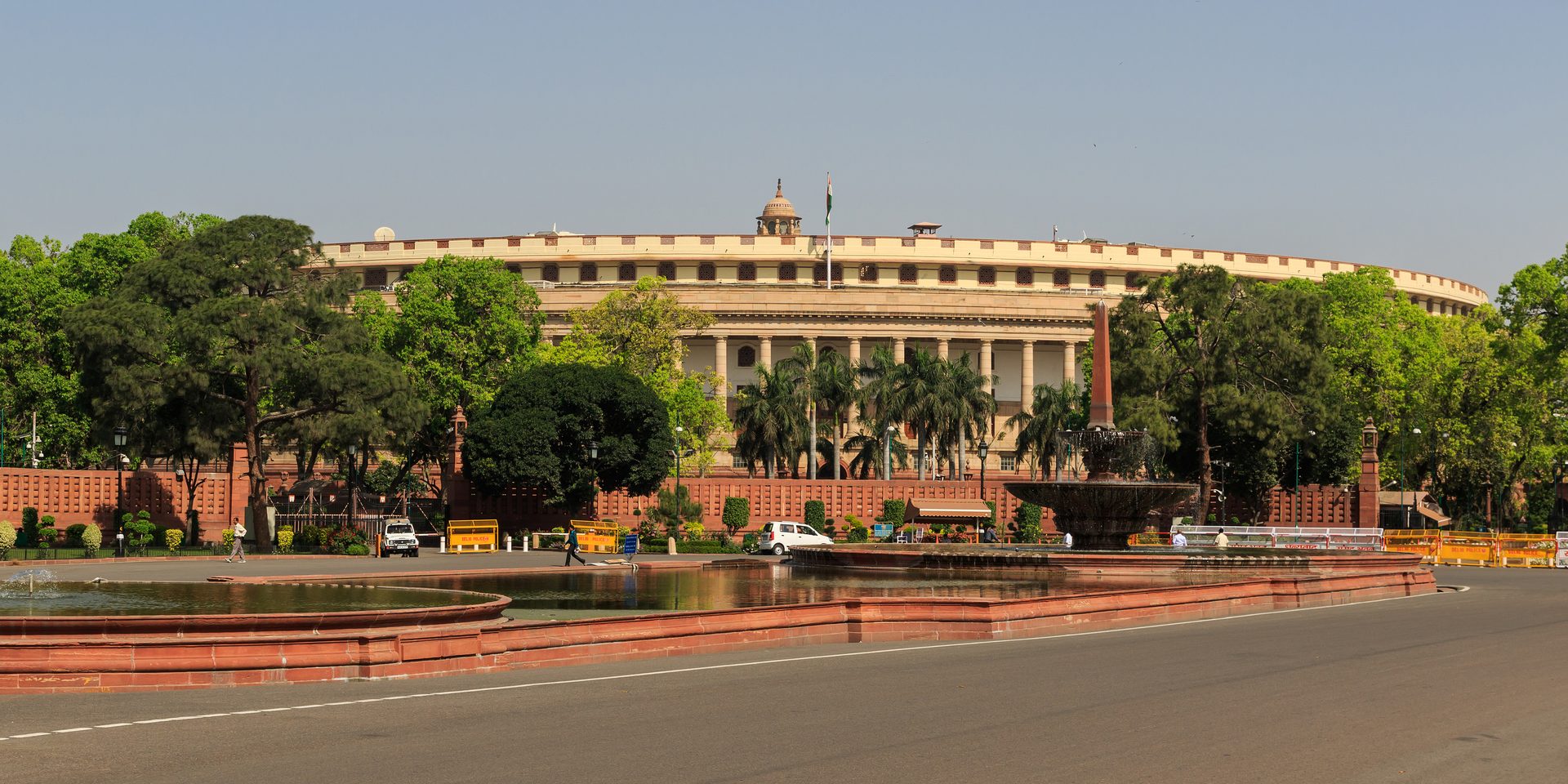
India's education sector has a new man in charge — though the precise nature of his charge is, for now, deliberately ambiguous.
On July 25, 2026, President Droupadi Murmu accepted the resignation of Dharmendra Pradhan from the Union Council of Ministers, with immediate effect, acting on the advice of Prime Minister Narendra Modi. Hours later, the government announced that senior cabinet minister Pralhad Joshi had been assigned additional charge of the Ministry of Education. Joshi formally took charge of the ministry on July 26.
The reshuffle followed weeks of nationwide student protests over an alleged paper leak in the NEET-UG examination — the high-stakes national entrance test for medical colleges — that badly damaged public confidence in the country's examination system.
The resignation
Pradhan's departure was the culmination of an extraordinary few weeks. Students took to the streets in Delhi and other major cities demanding accountability for the alleged leak, and the agitation grew into one of the most visible education protests in recent Indian history. In his resignation letter to the Prime Minister, Pradhan said the decision was not a matter of "individual prestige" and that he had been disturbed by the series of events that unfolded.
The government's official communiqué cited clause (2) of Article 75 of the Constitution — the standard provision governing ministerial tenure — and made clear the change took effect immediately.
Pradhan had been education minister through a consequential period. His tenure saw the continued rollout of the National Education Policy 2020, India's ambitious framework for overhauling school and higher education, along with what supporters describe as more than a hundred reforms large and small. His exit, however, came under a cloud, with the examination crisis overwhelming the reform narrative.
Who is Pralhad Joshi?
Pralhad Venkatesh Joshi, 63, is one of the Bharatiya Janata Party's most experienced administrators. Born in November 1962 in Vijayapura, Karnataka, he entered public life through the Rashtriya Swayamsevak Sangh before rising through the BJP. He was first elected to the Karnataka Legislative Assembly in 1996 and entered the Lok Sabha in 2004, winning the Dharwad constituency — a seat he has held through every general election since, making him a five-time Member of Parliament.
He served as Karnataka BJP president from 2012 to 2016, building a reputation as an organisation man and parliamentary strategist. In the second Modi government (2019–2024), he held the portfolios of Parliamentary Affairs, Coal, and Mines. Since June 2024, he has served as Union Minister for Consumer Affairs, Food and Public Distribution, and New and Renewable Energy.
Those portfolios he keeps. The Education Ministry is an additional charge — a distinction that matters. The official notification does not withdraw his existing responsibilities, nor does it describe the education assignment as a permanent, full-time appointment. In India's system, "additional charge" often signals an interim arrangement while the government decides on a longer-term configuration.
On taking charge, Joshi struck a studious note, saying his immediate priority would be to understand the functioning of the ministry before taking decisions — the remark of a man who knows he is stepping into a portfolio with a live crisis and a reform agenda he did not design.
Why this appointment matters
India's Ministry of Education oversees one of the largest education systems on earth: hundreds of millions of students, tens of thousands of colleges, and the machinery of national examinations that determine the futures of millions of young people each year. Who runs it matters enormously — and never more than in a moment of crisis.
The NEET-UG controversy cut to the heart of the system's legitimacy. Competitive examinations in India are not merely tests; they are the primary mechanism of social mobility for millions of families. A paper leak is not an administrative failure — it is a breach of the social contract. Restoring trust in the examination system is now the ministry's most urgent task, and Joshi inherits it on day one.
Beyond the crisis, the substantive agenda is crowded. The National Education Policy 2020 is mid-implementation, with its most contested elements still being fought over. The National Curriculum Framework is under development. The three-language formula — which has triggered sharp political disputes between the Centre and several states — remains unresolved, with central funding for school schemes tied to compliance. New teacher-training initiatives are underway. The Viksit Bharat Shiksha Adhishthan Bill is in the legislative pipeline.
Joshi's profile fits the moment in one important respect: he is a crisis manager and legislative operator, not an education specialist. As one analysis put it, he is administratively experienced but educationally untested — a fair initial verdict. His strengths are political management, parliamentary coordination, and steady administration. Whether those translate into education reform remains the open question.
What to watch
The first question is the simplest: is this permanent? If the "additional charge" arrangement stretches on for months, it will signal that the government is in no hurry to name a full-time education minister — and that education policy will be managed, for now, as a stability operation rather than a reform drive.
The second is the examination system. The government has promised reforms in the wake of the protests. What those look like in practice — new protocols for paper-setting and distribution, accountability for lapses, compensation for affected students — will be the first real test of Joshi's tenure.
The third is NEP 2020's momentum. Pradhan drove the policy's implementation hard, including the controversial linkage of central school funding to the three-language formula. Does Joshi continue that push, pause it, or quietly reorient? His early meetings and statements will be parsed closely by state governments, many of which have their own views.
For education leaders watching India — and given the scale of the system, that means education leaders everywhere — the Joshi appointment is a reminder that in the world's largest democracy, education policy is never far from politics. The ministry now has a seasoned political operator at the top. What it needs next is a plan to rebuild trust. The two are not the same thing, and the coming months will show whether Joshi can deliver both.

Stop Promoting Your Best Teachers Out of the Classroom
Lower School Head (Grades 3–6) — Holton-Arms School
Upper School Head — Winsor School
Stop Promoting Your Best Teachers Out of the Classroom

Aberdeen Council Chief Angela Scott Appointed to Lead University of Dundee’s Recovery as Principal and Vice-Chancellor

Angola Made French Compulsory in Primary School. The Hard Part Starts Now.
-
 Leadership2 weeks ago
Stop Promoting Your Best Teachers Out of the Classroom
-
 News3 weeks ago
Angola Made French Compulsory in Primary School. The Hard Part Starts Now.
-

 News3 weeks ago
273 Million Children Out of School: UNESCO’s Warning the World Can’t Ignore
-

 Higher Education3 weeks ago
New Presidents, New Playbooks: What Two Leadership Transitions Say About Higher Ed’s Future
-

 Innovation3 weeks ago
The Tutor That Wasn’t: What the Khanmigo Experiment Really Proved About AI in Schools
-

 Interviews3 weeks ago
The Microsoft Engineer Who Built Africa’s Most Daring University: Patrick Awuah’s Bet on Ethical Leadership
-
 Appointments3 weeks ago
Pralhad Joshi Takes Additional Charge of India’s Education Ministry After Pradhan Resigns Over NEET Paper Leak
-

 Interviews3 weeks ago
From Banking to 20 Million Classrooms: How Tariq Al Gurg Turned Dubai Cares Into a Global Education Powerhouse