

Innovation
The Tutor That Wasn’t: What the Khanmigo Experiment Really Proved About AI in Schools

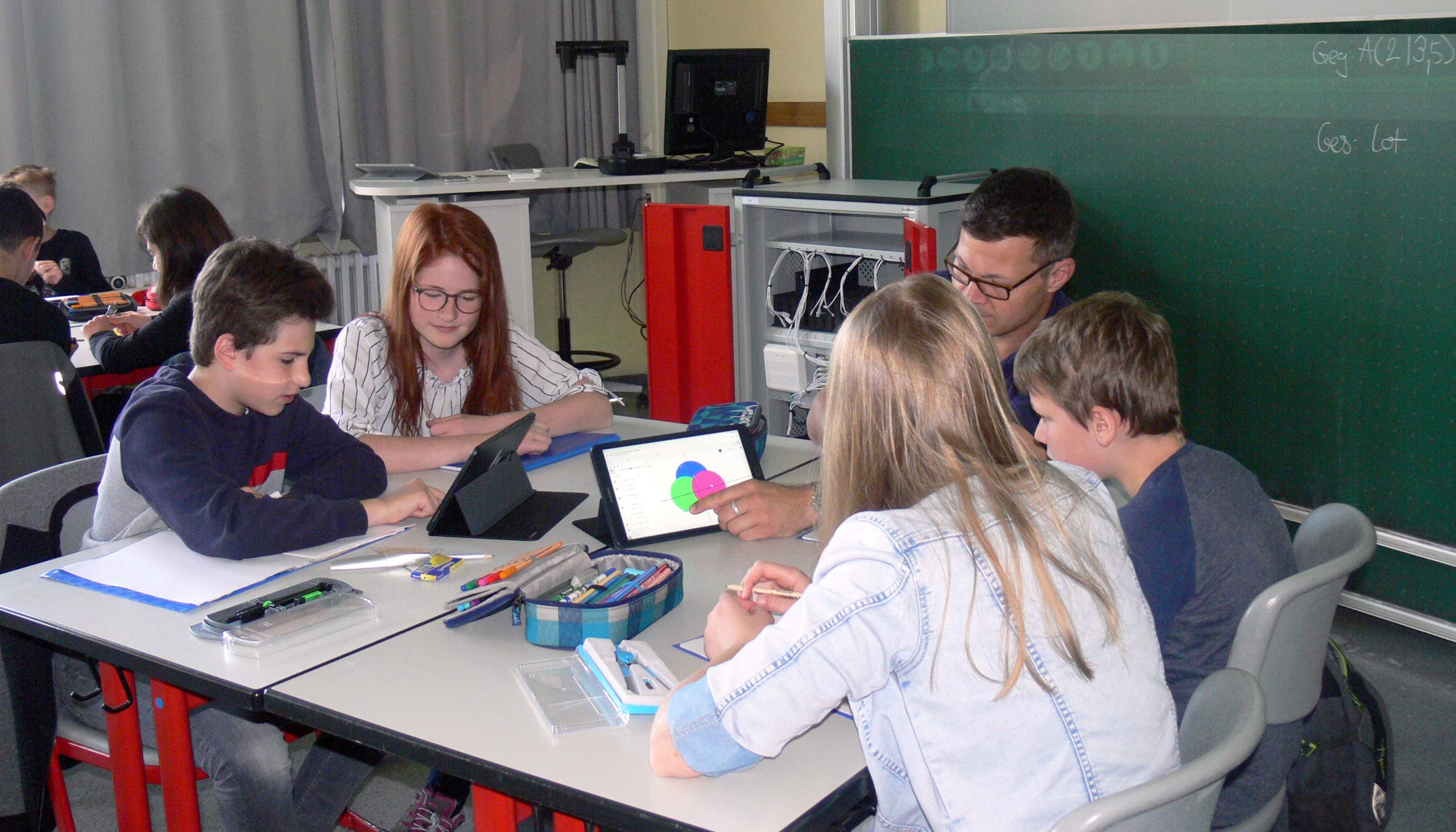
The Tutor That Wasn't: What the Khanmigo Experiment Really Proved About AI in Schools
The most important AI-in-education story of 2026 is not a breakthrough. It is a disappointment — and the rare company that published it anyway.
Khanmigo, Khan Academy's AI tutor, was the great hope of the generative AI education wave: a personal tutor for every child, built by the most trusted name in free learning, designed from the start to do what ChatGPT would not — to guide rather than answer, to tutor rather than tell. When independent researchers ran a randomized controlled trial across 18 middle schools over two years, the results were modest, honest, and deeply instructive.
Students who got the Khan Academy intervention did better in math than students in regular remedial classes. But the gains were no larger than what earlier studies had found from Khan Academy practice sessions with no AI at all. In other words, Khan Academy helped. The AI tutor added nothing.
And the reason, the researchers found, was almost embarrassingly simple: students barely used it. Seeking help remained a choice, and most students declined it most of the time. The tutor sat one click away, and the click rarely came.
The number: 0.14
The study — "One Click Away: AI Tutoring with Khanmigo in a Two-Year School Experiment," an NBER working paper by economists Philip Oreopoulos and Nina Low — focused on students at least a grade level behind in math, given an extra remedial period. Adjusted for a full year of active participation, the gain for below-grade-level students was 0.14 standard deviations.
Context matters. That figure sits squarely in the known range for math practice software, roughly 0.05 to 0.20 standard deviations. It is also measured against a control group that was itself using edtech tools — Waggle, IXL, Zearn, DeltaMath — so it represents the benefit of Khan Academy plus Khanmigo above and beyond alternative digital tools. Respectable. Real. And not, in any sense, a revolution.
To Sal Khan's credit, he did not spin it. In a detailed public response in August 2026, the Khan Academy founder praised the study — which his organization had no hand in designing or running — and confirmed what the data showed: internally, Khan Academy was seeing the same low engagement. He said he did not regret shipping the tutor early, argued the rollout had done students no harm, and explained what the company had learned. This is what serious edtech accountability looks like, and it is rarer than it should be.
What changed: from sidekick to teaching assistant
Khan Academy rebuilt the product around the findings. The 2023 version of Khanmigo lived in a separate tab students had to choose to open — the "one click away" of the paper's title. The new version is woven directly into Khan Academy itself. If a student asks for help before attempting a problem, the assistant is deliberately taciturn: little more than a hint and encouragement. But the moment a student gets something wrong, it appears on its own and works through the problem with them. Schools can also switch the assistant off entirely.
The company has gone further with a reimagined platform and a more proactive classroom assistant it calls Conmigo — less a side tutor, more a central teaching assistant. Early pilots, Khan says, are striking: classrooms that assign year-long units show roughly a 60 percent increase in skills leveled up, and in one pilot, thirty minutes of gamified work produced nearly four times the usual skill gains. These are company-reported pilot figures, not independent trials — but they show a team iterating on evidence rather than marketing.
The medium is not the method
The deeper lesson reaches back forty years. In 1984, Benjamin Bloom reported that one-to-one tutoring lifted students two full standard deviations above classroom peers — the average tutored student outperformed 98 percent of the control group. "Two sigma" became the founding myth of AI tutoring: build the tutor, get the effect.
But the myth skips the fine print. Bloom's studies had three groups, not two, and the mastery-learning group — frequent testing with corrective feedback, no tutor at all — gained a full standard deviation on its own. Half the famous effect came from the testing loop, not the tutor. Later reviews put realistic tutoring effects far lower: a major 2011 synthesis found human tutoring at about 0.79 standard deviations and step-based tutoring software at 0.76 — essentially tied. The honest range for tutoring effects, across the literature, sits closer to 0.3 or 0.4.
Read against that history, the Khanmigo result is not an anomaly. It is the pattern. A 2025 trial by Eedi and Google DeepMind found that human-supervised AI slightly outperformed human tutors alone on novel problems — 66.2 percent to 60.7 percent — but the AI was drafting messages that human tutors approved, 76.4 percent of them with little or no editing. The winning formula keeps appearing: AI extends the teacher; it does not replace the teaching.
And there is a darker data point every school leader should know. In a PNAS field experiment with nearly a thousand high school students, a plain GPT-4 assistant raised practice grades by 48 percent — then exam scores fell 17 percent once it was taken away. The machine had done the learning's job. A version redesigned to give hints instead of answers largely avoided the harm. Engagement without pedagogy is just screen time with better marketing.
What leaders should ask vendors
The Khanmigo story gives school leaders a template for evaluating every AI product that comes through the door:
Ask for the control group. Gains against doing nothing are easy. Gains against good existing tools are the real test. Oreopoulos and Low's control group was using real edtech — that is why 0.14 means something.
Ask about engagement, not just efficacy. The best-designed tutor in the world adds nothing if students don't click. Demand usage data, not just outcome data.
Ask whether the AI increases thinking. Hints or answers? That single design choice separated the PNAS experiment's harm from its help, and it separates Khanmigo's redesign from its first version.
Ask who supervises. The strongest results in the current literature keep a human in the loop — approving, guiding, deciding. "Autonomous" is a cost story, not a learning story.
Khan Academy deserves credit for running toward the evidence instead of away from it. The trial proved something more valuable than a breakthrough: that in education, the honest measurement is the innovation. The schools that insist on it will be the ones whose AI investments actually teach.
Innovation
Old Science, New Machines: What a Century of Learning Research Says AI Should Actually Do
Old Science, New Machines: What a Century of Learning Research Says AI Should Actually Do
The brain did not get an upgrade when ChatGPT launched. That obvious fact is the most underused insight in education technology. We have more than a century of research on how humans actually learn — and most of it points to a conclusion the AI industry keeps rediscovering the expensive way: the machine should make students think more, not less.
Before buying, piloting, or prompting anything, school leaders should know what the science already settled. It turns out to be a remarkably precise specification for what classroom AI ought to do.
Testing beats studying — and students don't believe it
In 2006, psychologists Henry Roediger and Jeffrey Karpicke at Washington University in St. Louis ran an experiment that should have reorganized every school on earth. College students learned short science passages. One group read a passage four times. Another read it once, then spent the remaining time writing down everything they could remember — retrieval practice, no peeking.
Five minutes later, the re-readers looked like winners: 83 percent recall against 71. They felt like winners too, confidently predicting they would remember more later. A week later the result inverted: the re-readers produced 40 percent of the passage; the testing group produced 61. The students who studied the most remembered the least, and the students who felt they had learned the most had learned the worst.
This is the testing effect, now supported by hundreds of studies, and it keeps beating everything schools actually do. In a 2008 follow-up, students who quizzed themselves on vocabulary remembered 80 percent of the words later; re-readers remembered about a third. In 2011, Karpicke and Purdue colleague Janell Blunt published a study in Science showing that retrieval practice outperformed concept mapping — teachers' beloved diagramming technique — even on inference tests, even when the final exam was itself a concept map. A landmark 2013 review in Psychological Science in the Public Interest rated practice testing as "high utility": one of only two study strategies to earn the top rating, the other being spaced practice. Highlighting and re-reading — students' favorite techniques — were rated among the least effective.
The implication for AI is direct. An AI that generates summaries, explains beautifully, and answers instantly is optimizing for the feeling of learning — the exact feeling Roediger and Karpicke proved is uncorrelated with actual retention. An AI that quizzes, withholds, and demands recall is optimizing for the thing itself.
Spacing, mastery, and the feedback loop
The second settled finding is spacing: distributing practice over time beats cramming, robustly, across a meta-analysis of 839 effect sizes. The optimal gap between sessions scales with how long you need to remember — roughly 10 to 20 percent of the retention interval. For a semester exam, that means revisiting material across weeks, not nights.
The third is mastery. Benjamin Bloom's 1968 insight — students must demonstrate mastery of prerequisites, around 90 percent, before moving on — produced an effect size of a full standard deviation from the feedback-and-correction loop alone, before any tutoring entered the picture. It is the same principle behind the new AI-driven schools' "goes green" thresholds, and it is half a century old.
Together, these three findings describe an ideal learning machine with startling precision: it would test rather than tell, space rather than cram, and refuse to advance the student until mastery is demonstrated — with fast, corrective feedback at every step. That machine is entirely buildable with today's AI. Most products on the market do the opposite: they tell, they cram, and they advance on vibes.
The 48 percent warning
The most important recent data point comes from a PNAS field experiment with nearly a thousand high school math students. A plain GPT-4 assistant raised students' practice grades by 48 percent. Then researchers removed it for the exam — and those students scored 17 percent lower than the control group. The AI had not taught them anything durable; it had performed the work while they watched.
But a second version of the tutor, constrained to give hints instead of answers, largely avoided the harm. Students still had to retrieve, still had to struggle, still had to think. The difference between an AI that damages learning and one that supports it was not the model — it was the pedagogy wrapped around it.
Estonia's national AI program absorbed this lesson at the design stage: its student application, built with OpenAI, was deliberately engineered to guide thinking rather than supply ready-made answers. The country's bet is that the interface philosophy matters more than the model weights. The research agrees.
Five design principles for the AI classroom
Distilled from the science, here is what classroom AI should do:
1. Retrieval first. Every AI interaction should begin with the student producing, not consuming. Configure tutors to quiz before explaining. Start class with five AI-generated retrieval questions on yesterday's lesson — answers withheld until students commit.
2. Hints, never answers. The PNAS result is the bright line. If a tool hands over solutions, it is a homework machine, not a learning machine. Demand hint-based, Socratic behavior from every AI product you deploy — and verify it behaves that way under student pressure, because students will pressure it.
3. Space and interleave. Use AI to schedule cumulative review across weeks and to mix topics rather than blocking them. This is pure software advantage: no teacher can track 30 students' optimal review schedules by hand; a machine can.
4. Close the feedback loop fast. Timely, corrective feedback is among the highest-impact moves in teaching. AI makes instant rubric-aligned feedback possible on every draft and practice set — but keep the teacher as the final judge on anything that matters, because AI feedback is fluent, confident, and sometimes wrong.
5. Preserve desirable difficulty. Learning requires effort; ease is the enemy. Every AI feature should be interrogated with one question: does this make the student think harder or less hard? Retrieval practice feels worse than re-reading and works better. The science has been shouting this for decades.
The specification was already written
There is something clarifying about realizing the blueprint predates the technology. Roediger and Karpicke, Dunlosky, Cepeda, Bloom — none of them knew a chatbot was coming, and all of them described what it should do. Test, don't tell. Space, don't cram. Master, don't advance. Hint, don't answer.
The schools that will get the most from AI are not the ones with the most advanced models. They are the ones that hold every product against the oldest standard we have: does this make the student do the thinking? The science answered that question long before anyone asked it about machines. We should finally listen.
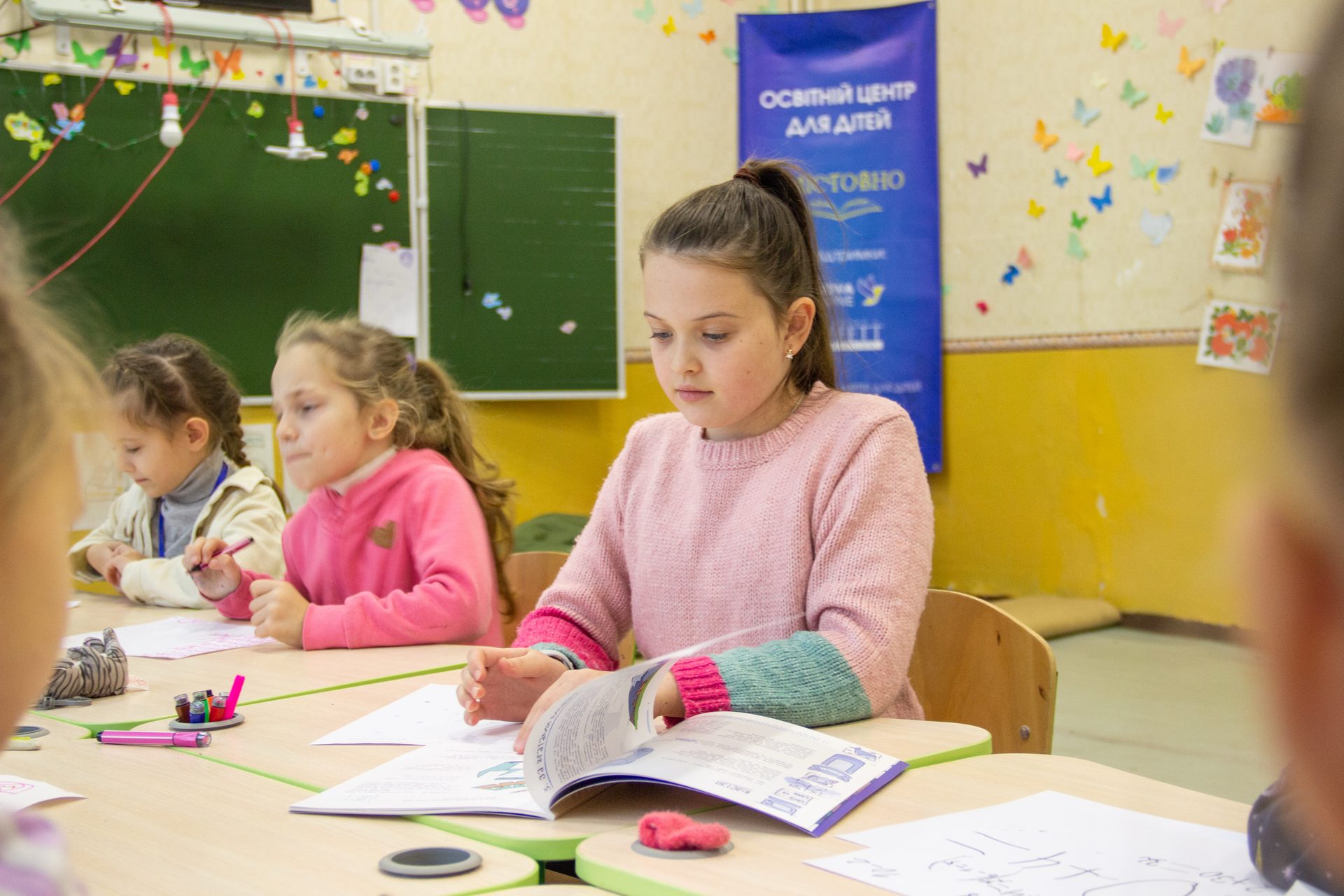
The Two-Hour School Day: Inside the Schools Rebuilt Around AI
In July, the Wall Street Journal documented a quiet exodus: high-earning families — finance, venture capital, tech — pulling their children out of conventional schools in favor of a new breed built around AI-driven academics and explicit life-skills training. At one San Francisco campus, tuition runs $75,000 a year, and parents who could send their children anywhere are choosing the two-hour school day.
The flagship of the movement is Alpha School of Austin, Texas, which has grown from 15 to 50 campuses across the United States in a single year, with new locations in Boston, Chicago, Denver, Atlanta, Nashville, and Miami Beach. Its proposition is stark: compress all academic instruction into about two hours each morning with an AI tutor, then spend the rest of the day on something traditional schools barely attempt — workshops in leadership, entrepreneurship, public speaking, financial literacy, and teamwork.
How the two hours work
Alpha's model rests on two old ideas executed with new machinery. The first is mastery learning: a student cannot advance until demonstrating over 90 percent accuracy, where a traditional school lets a 70 percent pass — meaning 30 percent of the material never learned. The second is personalization at a scale no human faculty can match: diagnostics establish each student's true level on entry (Alpha reports that incoming "A" students often test anywhere from one grade ahead to three behind), and the system assigns targeted lessons until mastery.
A full grade level of material in one subject takes 20 to 30 hours of focused work on the platform, by the company's account. A student two years behind is roughly 40 to 60 hours from grade level — a gap closable in months, not years. When the day's academic work is complete, the interface, in the school's telling, "goes green," and students move to the workshops: fifth graders running a profitable Airbnb, second graders training for and completing a 5K, high schoolers staging a Broadway-style musical.
The platform itself is deliberately not a chatbot. It leans on adaptive algorithms and integrates materials from established providers — IXL for practice, Khan Academy for explanations, Trilogy Software for skill modules — with camera-based tracking to monitor engagement and adjust pacing. Students advance only after hitting mastery thresholds. Adults in the building serve as guides and mentors rather than lecturers.
Founder Joe Liemandt has committed $1 billion to what he calls a full-stack reinvention, with a stated long-term goal of on-device AI running on tablets under $1,000, reaching a billion learners over twenty years. Whether or not that vision materializes, the near-term expansion — dozens of campuses, tuition from $40,000 in Austin to $65,000 elsewhere — signals genuine demand.
The wider movement
Alpha is the largest, but not the only, experiment. Forge Prep, a new middle school in Livingston, New Jersey, drew 600 applications for 34 inaugural seats with a philosophy its founders describe as "creation, not consumption" — and a phone-free building. The through-line across these schools is not really the AI; it is time. By compressing academics, they buy hours for the human capabilities — communication, negotiation, planning, self-management — that conventional schools tend to assume rather than teach.
Public districts are watching and, cautiously, buying. San Francisco Unified has licensed Amira, an AI reading tutor for kindergarten through fifth grade that listens to children read aloud and offers tailored prompts on phonics, decoding, fluency, vocabulary, and comprehension — one-on-one literacy instruction at a scale reading specialists cannot provide alone.
The honest caveats
None of this is settled science, and school leaders should hold two truths at once. First, the design instincts are often right: mastery pacing works, diagnostics beat transcript grades, and explicit life-skills instruction fills a real gap. The research on attention and adolescent development has pointed this way for years.
Second, the evidence base is thin where it matters most. These are private schools serving affluent, self-selected families; claims like "learn up to 10 times faster" or "top 1 percent performance" come from the companies themselves, not independent trials. The Khanmigo experiment — covered elsewhere in these pages — is a standing warning that AI-driven personalization does not automatically produce learning gains, and that engagement is the binding constraint. As districts evaluate AI teaching systems, the central question is the one now being asked in earnest: how should schools evaluate and oversee AI systems designed to educate and influence children?
There are also questions the brochures don't answer. Camera-based engagement tracking raises obvious privacy issues. A model built for motivated, well-resourced families may not transfer to the comprehensive public school down the road. And the deepest value proposition — the workshops, the mentorship, the human formation — is precisely the part the AI doesn't do.
What every school can borrow
You do not need a $65,000 tuition or a billion-dollar backer to take the useful parts. Three ideas travel well:
Start from diagnostics, not transcripts. Alpha's finding — that grades mask enormous variation in actual mastery — is available to any school willing to test for it. A week of diagnostic assessment at the start of the year can redirect months of instruction.
Protect time for the human curriculum. The two-hour day is really an argument about priorities: academics compressed so that formation expands. Even without AI tutors, schools can ask which hours currently produce the least learning and reclaim them for communication, enterprise, and character.
Demand evidence before scale. The districts getting this right — San Francisco's careful licensing, Estonia's research-partnered national rollout — treat AI as a hypothesis to be tested, not a product to be bought. Pilot small, measure honestly, expand only on proof.
The new-model schools may or may not be the future. But they have asked the question every school leader should be asking: if the technology can finally deliver personalization at scale, what should the school day be for? The answer, increasingly, looks less like more instruction — and more like everything instruction was crowding out.
Innovation
How to Write AI Into Your Curriculum: Lessons From Estonia, UNESCO, and the Five Big Ideas
How to Write AI Into Your Curriculum: Lessons From Estonia, UNESCO, and the Five Big Ideas
Here is the statistic that should open every curriculum meeting this year: roughly nine out of ten schools and universities worldwide have no formal guidelines for AI. Students are using it — 86 percent of them, by one 2025 measure. Teachers are using it. And the curriculum, in most schools, says nothing at all.
That silence is the real story of AI in education. Not the tools, which arrived in a flood, but the absence of any deliberate plan for what students should actually learn about them. A handful of places have stopped improvising. Their approaches point to a practical playbook any school leader can borrow.
Estonia: teachers first, students second
The most ambitious national experiment is happening in Estonia. The AI Leap program — TI-Hüpe in Estonian — launched its pilot in September 2025 across all 154 of the country's upper secondary schools, reaching around 20,000 students in grades 10 and 11 and several thousand teachers. A second phase in 2026 extends it to vocational schools and new tenth-graders, adding roughly 38,000 more students.
What makes Estonia's approach worth studying is its sequencing. Students did not get access first. Teachers did. A national support program launched in August 2025 gave upper secondary teachers access to ChatGPT and Gemini, alongside structured training. More than 60 percent of participating teachers now use AI tools weekly — a jump of twenty percentage points in a year — and schools established Professional Learning Communities where teachers develop subject-specific ways of working with AI.
Only then did students get their tool: a learning application developed with Estonian researchers and OpenAI, built on ChatGPT but deliberately designed to guide thinking rather than hand over ready-made answers. It answers in Estonian, following local communication norms. The design philosophy is the curriculum philosophy: the machine is a thinking partner, not an answer machine.
Estonia has done this before. In the 1990s, the Tiger Leap program wired every school to the internet and laid the foundation for the country's digital society. AI Leap is explicitly framed as its successor — same public-private model, same bet that infrastructure plus teacher capacity beats gadgets alone. President Alar Karis, who initiated the program, has cast it as a question of national competitiveness: the economy will belong to countries whose young people can work with AI, not just alongside it.
UNESCO: the global reference point
For schools that need a framework rather than a national program, UNESCO published the closest thing to a global standard in 2024: two AI competency frameworks, one for students and one for teachers, following its first-ever guidance on generative AI in education in September 2023.
The student framework is built around four competencies: a human-centred mindset (students assert their agency over AI, not the reverse), ethics of AI, AI techniques and applications (foundational knowledge), and AI system design (problem-solving and creativity). The teacher framework adds two more areas: AI pedagogy — using AI for innovative teaching — and AI for professional development. The through-line is explicit: AI should complement teachers, never replace them.
UNESCO also drew a line many schools have avoided drawing: it proposed 13 as the minimum age for students' generative AI use. And it has put real weight behind adoption — training seminars in more than 100 countries, direct support to 58 countries building curricula and certified teacher training.
A school leader does not need to adopt the framework wholesale. But its structure answers the question most curricula dodge: AI education is not a single subject. It is a mindset, an ethics, a technical foundation, and a design practice — woven across disciplines, not bolted onto computer science.
The Five Big Ideas: a curriculum spine that fits on a poster
The most teacher-friendly framework predates the generative AI boom by several years. AI4K12, an initiative of the Association for the Advancement of Artificial Intelligence and the Computer Science Teachers Association funded by the US National Science Foundation, began in 2018 with a simple observation from Carnegie Mellon professor Dave Touretzky: almost no K-12 technology plan anywhere defined what students should know about AI.
The answer was the Five Big Ideas: perception (computers sense the world), representation and reasoning (they model it), learning (they learn from data), natural interaction (they communicate with humans), and societal impact — placed deliberately at the center of the group's infographic, now translated into 16 languages. K-12 teachers then built grade-band progression charts spelling out what each idea means for K-2, 3-5, 6-8, and 9-12 students.
The genius of the Five Big Ideas is that they give teachers language without requiring a computer science degree, and they refuse to let "AI" mean "chatbot." A primary teacher can teach perception with a sorting game; a secondary teacher can teach societal impact through a debate on facial recognition. The framework is openly licensed for local adaptation — an honesty about the field's youth that top-down mandates rarely offer.
A four-step playbook for your school
Borrowing from all three, here is what a serious curriculum integration looks like:
1. Audit before you adopt. Map where AI already touches your school — which subjects, which tools, which rules teachers have improvised. You cannot govern what you have not mapped. The UNESCO statistic is your warning: the gap between usage and policy is where the risks live.
2. Adopt a spine, then localize it. Take one framework — UNESCO's competencies, the Five Big Ideas, or both — and translate it into your grade bands. The AI4K12 progression charts are a template: what does "societal impact" mean for a seven-year-old versus a seventeen-year-old? Publish it where parents can see it.
3. Train teachers before deploying to students. Estonia's sequencing is the model: give teachers the tools, the training, and the collaborative space first. A teacher who has never wrestled with an AI tool cannot teach students to wrestle with one. Budget the professional development before the licenses.
4. Assess AI literacy, not just AI use. Build the competencies into assessment: can students explain how a model produces its answers? Can they spot bias, verify claims, disclose their AI use? What gets assessed gets taught — and right now, in most schools, AI literacy is assessed nowhere.
The curriculum is the policy
Tools will keep changing. The frameworks will be revised, the national programs will expand or stall, and today's flagship application will look quaint in three years. What endures is the decision a school makes about what its students should understand — about agency, about evidence, about the difference between an answer and thinking.
Estonia, UNESCO, and a group of American teachers who started in 2018 all converged on the same insight: you do not teach AI by buying software. You teach it by deciding, deliberately and in writing, what it means for a young person to be educated in the age of intelligent machines. The schools that write that down now will spend the next decade ahead of the ones still improvising.

Stop Promoting Your Best Teachers Out of the Classroom
Lower School Head (Grades 3–6) — Holton-Arms School
Upper School Head — Winsor School
Stop Promoting Your Best Teachers Out of the Classroom

Aberdeen Council Chief Angela Scott Appointed to Lead University of Dundee’s Recovery as Principal and Vice-Chancellor

Angola Made French Compulsory in Primary School. The Hard Part Starts Now.
-
 Leadership2 weeks ago
Stop Promoting Your Best Teachers Out of the Classroom
-
 Appointments3 weeks ago
Aberdeen Council Chief Angela Scott Appointed to Lead University of Dundee’s Recovery as Principal and Vice-Chancellor
-
 News3 weeks ago
Angola Made French Compulsory in Primary School. The Hard Part Starts Now.
-

 News3 weeks ago
273 Million Children Out of School: UNESCO’s Warning the World Can’t Ignore
-

 Higher Education3 weeks ago
New Presidents, New Playbooks: What Two Leadership Transitions Say About Higher Ed’s Future
-

 Interviews3 weeks ago
The Microsoft Engineer Who Built Africa’s Most Daring University: Patrick Awuah’s Bet on Ethical Leadership
-

 Appointments3 weeks ago
Pralhad Joshi Takes Additional Charge of India’s Education Ministry After Pradhan Resigns Over NEET Paper Leak
-
 Interviews3 weeks ago
From Banking to 20 Million Classrooms: How Tariq Al Gurg Turned Dubai Cares Into a Global Education Powerhouse