

News
France’s Schools Are Burning. Its Students Are Done Waiting.


France's Schools Are Burning. Its Students Are Done Waiting.
PARIS — Between 400 and 500 French high schools — roughly one in eight of the country's 3,700 lycées — were completely or partially closed on Monday, October 5, as a student protest movement over crumbling schools, teacher shortages, and overcrowded classrooms entered its second week. Education Minister Edouard Geffray told reporters the closures were necessary because security conditions could not be guaranteed.
The demonstrations, which began in late September at a high school in a Paris suburb, have become the largest student mobilization France has seen in years — and one of the most violent. Twenty-four schools have been burned or ransacked since the unrest began, according to the education ministry. Seventy-eight employees of the national education system have been injured. Police have arrested around 5,000 people, about 85 percent of them minors.
How a suburban blockade became a national crisis
The movement started modestly: blockades of lycée entrances in the Paris region, organized by students demanding action on missing teachers, overcrowded classes, and decaying buildings. It spread within days to Montpellier, Nantes, Marseille, Toulouse, Lille, and beyond. By early October, some 900 demonstrations, blockades, and related incidents were underway outside high schools across France, according to police figures.
The grievances are concrete. Students describe classes of 32 to 36 pupils, teachers missing for months — in some cases, pupils went seven months without a French teacher in an exam year — and buildings in shocking disrepair. Reports from the movement cite prefabricated toilets with no running water and vermin in school corridors. University students joined the demonstrations in early October, adding complaints about inadequate higher-education funding, and a major student union called a national action day for October 6.
That Tuesday, the mobilization peaked. More than 250,000 people took to the streets across France, according to official estimates. The Union Syndicale Lycéenne, a student union, claimed around 2,000 high schools were brought to a standstill. The education ministry put the number of closures lower, at more than 900 — still an extraordinary figure.
The government's response
Prime Minister Sébastien Lecornu, confronting the gravest domestic crisis of his tenure, told parliament that the education system was facing "the heaviest toll in decades paid by the school system." At least 215 teenagers and 85 education workers had been injured in clashes, he said, along with more than 700 police officers.
Lecornu ordered all lycées to suspend lessons for three days to allow dialogue between schools and students. "The protests are real, and we must listen to the students," he said, promising the government would address the state of school buildings among other demands. Whether schools would comply with the suspension — or keep lessons running — remained uncertain.
Government spokeswoman Maud Bregeon struck a firmer tone: "Our priority is to restore order." Interior Minister Laurent Nuñez reported that 1,747 people were arrested on a single Friday, bringing total arrests past 5,000. In Paris, police chief Patrice Faure published an open letter arguing that those who launched the protests no longer controlled them, and urged students to abandon blockades for peaceful demonstration — a plea the unions rejected as they called for further action.
What France's students are actually asking for
Strip away the burned bins and the tear gas, and the students' demands read like a school leader's own diagnostic checklist: recruit more teachers, repair the buildings, reduce class sizes, fix the university admissions system.
The teacher shortage is the sharpest edge. France, like much of Europe, has struggled for years to staff classrooms, particularly in disadvantaged suburbs. When a lycée cannot find a French teacher for seven months, the problem is no longer a staffing gap — it is a breach of the basic contract between the state and families.
The buildings tell the same story. Decades of underinvestment in school infrastructure have left a visible legacy: leaking roofs, obsolete heating, classrooms that become unbearable during heatwaves. Students who marched this month grew up in these buildings. They are not asking for luxury. They are asking for schools that do not feel abandoned.
And then there is Parcoursup, the university admissions platform, a persistent source of student anxiety. For seventeen-year-olds already navigating overcrowded classrooms, an opaque admissions algorithm feels like one more institutional indifference.
The lesson for education leaders
There is a temptation, watching from abroad, to file this under "French exceptionalism" — the country's long tradition of street politics. That would be a mistake.
Every element of this crisis exists elsewhere: the teacher shortages (acute across Europe and the US), the infrastructure backlog (chronic in most OECD systems), the overcrowded classrooms, the fraying trust between institutions and the young people they serve. France is distinctive mainly in the speed with which students converted private frustration into public action — and in the state's inability to answer before the streets did.
For school leaders, the warning is plain. Students are sophisticated observers of institutional decline. They notice the missing teacher, the broken toilet, the class of 36 long before any ministry dashboard registers it. When leaders dismiss those observations — or when systems lack any channel for students to be heard — the grievances do not disappear. They accumulate, until they find another outlet.
The French government now faces the same question every education system eventually faces: whether to treat student protest as a security problem or as information. Lecornu's three-day suspension bought time for dialogue. What happens in the weeks after — on teacher recruitment, on building renovation budgets, on class sizes — will determine whether October 2026 is remembered as a turning point or as a prelude.
News
America Leaves UNESCO on December 31. Global Education Loses a Funder — and a Seat at the AI Table.
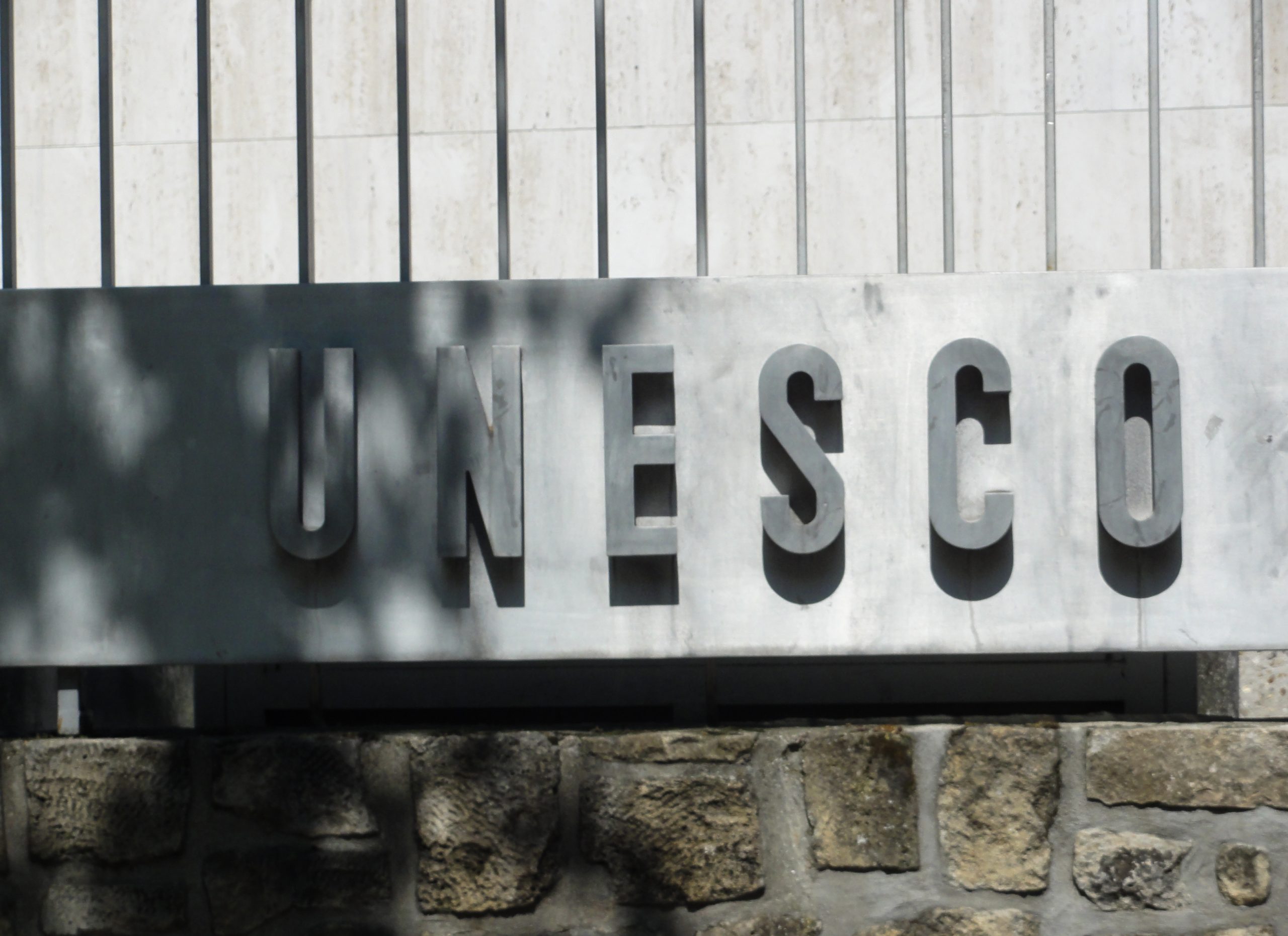
America Leaves UNESCO on December 31. Global Education Loses a Funder — and a Seat at the AI Table.
Subheadline: The third American withdrawal from the UN's education agency takes effect in under three months. The budget hole is 8%. The influence hole is bigger — and China is already filling it.
On December 31, 2026 — less than three months from now — the United States will formally leave UNESCO, the United Nations Educational, Scientific and Cultural Organization. The announcement came on July 22, 2025, when the State Department declared that "continued involvement in UNESCO is not in the national interest of the United States." It is America's third withdrawal from the agency, and this time the education stakes are higher than ever.
For education leaders, the story is not really about heritage sites or biosphere reserves, though those matter. It is about who writes the rules for the next decade of global education — from AI ethics in classrooms to teacher standards to workforce development frameworks — and about what happens to the programs that depended on American money and expertise.
What America is walking away from
UNESCO is the UN's lead agency for education: 194 member states, custodian of global education data, convener of the standard-setting conversations that shape what "quality education" means worldwide. Its programs touch literacy campaigns, girls' education in conflict zones like Yemen and Ukraine, teacher training, curriculum development, Holocaust remembrance education, and the integration of climate resilience into school systems.
The United States was one of UNESCO's largest funders, contributing an estimated 8% of its annual budget, plus the long shadow of $542 million in arrears dating back to Palestine's admission as a member in 2011. American agencies — from the US Geological Survey to NASA — partnered with UNESCO on water management, tsunami warning, and scientific collaboration. American educators and researchers relied on UNESCO's data and networks for policy work that crossed borders.
Director-General Audrey Azoulay called the withdrawal "regrettable" and "anticipated," noting pointedly that it "may affect first and foremost our many partners in the United States of America." That was not diplomatic boilerplate: US-based researchers, educators, and cultural professionals are about to lose formal access to multilateral funding streams, data-sharing protocols, and collaborative projects on challenges — climate change, pandemics, digital literacy — that no country can address alone.
The China factor
Every analysis of the withdrawal converges on the same geopolitical reality: the vacuum will not stay empty. China is now UNESCO's largest funder, and its influence over the agency's agenda is growing accordingly. U.S. Senator Jeanne Shaheen called the exit a "win for China." French President Emmanuel Macron, by contrast, vowed France's "unwavering support" for the organization. China's Foreign Ministry labeled the American move "irresponsible."
For education, the sharpest edge of this shift is artificial intelligence. UNESCO has positioned itself as the global standard-setter for AI ethics — including AI in education — and those standards are being written now. As Brookings analysts warned, America's departure, "with no plan for how to participate in future global conversations on topics from generative artificial intelligence (AI) in education to global workforce development should concern all Americans." Representative Gregory Meeks cautioned that China could "celebrate our empty seat" in setting AI standards. The country that writes the ethics framework for AI in classrooms shapes the products, the procurement rules, and the pedagogical norms that follow.
What breaks first
The effects are already visible in the machinery:
Program reviews are stalling. In July 2026, US biosphere reserve managers were warned that the withdrawal would delay required 2027 periodic reviews — "we can't submit it if we wanted to" — forcing the Man and the Biosphere program to relax deadlines for American sites.
Education programs face funding gaps. Literacy initiatives, teacher training partnerships, and curriculum development projects that relied in part on US grants must now find new sponsors or scale back. Programs for education in Africa and in conflict zones — precisely where American expertise and funding were pivotal — are the most exposed.
Standard-setting moves on without Washington. The Futures of Education initiative, global AI ethics guidelines, and digital-access frameworks will proceed with American input absent. As one analyst put it, disengagement "cedes ground in arenas where ideational influence, rather than kinetic force, is paramount."
US communities lose leverage. American cities seeking Creative City designations and communities pursuing World Heritage status face a steeper path without direct collaboration — with downstream effects on cultural tourism and the education programs those designations fund.
The administration's case
The Trump administration's defenders frame the exit as values-driven and fiscally responsible: a rejection of UNESCO's "woke" agenda and alleged anti-Israel bias, aligned with "America First" priorities, that also eliminates the 8% budget contribution and the arrears question. Israel's Foreign Minister Gideon Sa'ar praised it as "moral leadership." For supporters, multilateral education governance is precisely the kind of global entanglement the administration was elected to unwind — of a piece with the parallel effort to dismantle the federal Department of Education at home.
Critics call it shortsighted isolationism that harms vulnerable regions first and American influence most. Both things can be true at once: the savings are real and immediate; the costs are diffuse, long-term, and borne disproportionately by others.
What education leaders should do
For school and system leaders outside the United States, three practical implications follow:
First, watch the standards. If your system references UNESCO frameworks — on AI in education, on media literacy, on global citizenship — understand that the consensus behind them is shifting. Engage directly with UNESCO processes; the seats are open.
Second, diversify partnerships. Programs that routed through US-UNESCO channels need new anchors. European, Asian, and multilateral funders are repositioning; early movers will secure the partnerships that latecomers compete for.
Third, teach the moment. The UNESCO exit is itself a curriculum event — a live case study in multilateralism, soft power, and how global governance actually works. The students in your classrooms will inherit the system being renegotiated now.
On January 1, 2027, the United States will be outside the room where global education policy is made. The question for everyone else is what to do with the seats it left behind.
DZY INFO covers global education governance and multilateral policy. Tips: news@dzy.info.

South Africa's BELA Act Is Now Fully in Force. The Language Fight Is Just Beginning.
Subheadline: Grade R is compulsory, school governing bodies have lost their final say on language and admissions — and AfriForum is taking the government to court. School leaders are caught in the middle of the country's most consequential education law in a generation.
South Africa's Basic Education Laws Amendment Act — BELA — is now the law of the land in full. Signed by President Cyril Ramaphosa in September 2024 after a parliamentary journey that began in 2017, the Act amends the South African Schools Act of 1996 and the Employment of Educators Act of 1998. Its regulations took effect on January 1, 2026, aligned with the start of the school year.
For the country's roughly 23,000 public schools, BELA rewrites the basic contract between the state, school governing bodies (SGBs), and parents. And one month into the final quarter of 2026, the most explosive part of that rewrite — who decides what language a school teaches in — is heading to court.
What BELA changes
The Act's headline reforms are sweeping:
Grade R is now compulsory. All children turning five by June 30 of their admission year must be enrolled in Grade R, the reception year. National enrolment reached a provisional 773,925 in 2025. But the workforce is not ready: more than 7,000 Grade R practitioners still lack the required NQF Level 6 qualification, though 3,372 have volunteered for further study under a departmental upskilling commitment.
Admissions power shifts to the state. Clause 4 gives provincial education departments the final say over school admissions policies, curtailing the autonomy SGBs previously enjoyed — including the ability to set admission ages and manage waiting lists.
Language policy needs state approval. Clause 5 — the most contested provision — requires public school governing bodies to obtain approval from the provincial head of department for their language policies. In practice, this means single-medium schools, overwhelmingly Afrikaans, can no longer unilaterally decide to teach in only one language.
Plus: tighter homeschooling regulation, an explicit ban on corporal punishment and initiation practices, penalties for disrupting school operations or preventing learner attendance, and expanded provincial powers over educator appointments — a shift of hiring authority from SGBs to government officials that, as University of Cape Town academics note, is already encountering resistance.
Nine regulatory frameworks are being developed to operationalize the Act. Two — on school capacity and learner admissions — have been finalized and approved by the chief state law adviser. Seven more, covering learner pregnancy, educator development, and language policy itself, remain under legal review.
The Afrikaans schools at the center of the storm
The language provisions strike directly at the 882 former Model C, Afrikaans-medium public schools — the historically white, well-resourced schools of the apartheid era that retained single-language instruction after 1994. According to the Department of Basic Education, 487 of them are now rewriting their language policies to introduce additional languages of instruction.
Supporters call this long-overdue transformation: in a country with 12 official languages, including South African Sign Language, publicly funded schools cannot indefinitely reserve themselves for one linguistic community. UCT language scholar Dr. Xolisa Guzula describes BELA as a groundbreaking step toward fulfilling South Africa's overdue commitment to multilingual education — the fulfillment, she suggests, of a vision the late linguist Neville Alexander spent his life advocating.
Critics call it an attack on mother-tongue education. AfriForum and Solidarity argue the Act targets Afrikaans schools by stripping governing bodies of the final decision on language of instruction, and AfriForum's "Stop BELA" petition mobilized significant public opposition. The Democratic Alliance objected to clauses 4 and 5 as unnecessary centralization — a notable position given that the basic education minister now implementing the law, Siviwe Gwarube, is herself a DA appointee in the Government of National Unity.
October 2026: the lawsuit
The uneasy truce broke in early October 2026. AfriForum, together with Solidarity and its schools support center, announced legal action against the government over the promulgation of the Act, calling Ramaphosa's full implementation "irrational and a breach of various agreements." The organizations sent legal letters to both the President and Minister Gwarube, demanding resolution within 10 days and warning of further court action.
Their core claim: the promulgation contradicted Gwarube's own earlier recommendation that the language and admissions clauses be delayed and referred back to Parliament under section 79 of the Constitution — and that by co-signing the promulgation notice, the minister acted against her own advice. In a press briefing held exclusively in Afrikaans, AfriForum CEO Kallie Kriel called full implementation "an act of aggression" against Afrikaans schools and children.
The response was swift and sharp. Khomotjo Joy Maimela, chairperson of the National Assembly's Portfolio Committee on Basic Education, said AfriForum's "attack" borders on racism and reveals a desire to keep former Model C schools exclusionary. Gwarube, for her part, has pledged to implement the law "in a manner that protects the learner, that protects the teacher, and that protects our schools" — while insisting on balance between SGB autonomy and state authority.
What school leaders must do now
Strip away the politics, and BELA presents every South African school leader with a concrete compliance agenda:
Audit your language policy. If your SGB has not yet aligned its admissions and language policies with the amended law — and departmental monitoring visits in June found many had not — this is now urgent. Single-medium schools need a credible multilingual plan, not a holding position.
Budget for language capacity. UCT academics warn that schools must budget for recruiting suitably qualified educators, particularly for African indigenous languages. The teacher supply for genuine multilingual instruction does not yet match the legal requirement — a familiar implementation gap.
Prepare for Grade R properly. Compulsory Grade R means infrastructure, practitioners working toward NQF Level 6, and curriculum alignment with the foundation phase. The 7,000 underqualified practitioners are a national risk concentrated in the poorest schools.
Document everything. With AfriForum's challenge pending and the regulations on language policy still under legal review, school leaders should keep meticulous records of their compliance steps. Whatever the courts decide, the paper trail protects the school.
The deeper question
BELA forces South Africa to confront a question it has deferred for thirty years: can a public school system be simultaneously excellent, equitable, and multilingual — and who gets to decide the trade-offs? The apartheid legacy concentrated resources in single-language schools; the democratic era never fully resolved whether those schools belong to their communities or to the nation.
The court battle will decide the legal boundaries. But the educational outcome will be decided in staff rooms and SGB meetings, by leaders navigating between a law that demands transformation and communities that fear erasure. That is the hardest leadership assignment in South African education today — and it has just become compulsory.
DZY INFO covers African education policy and language-in-education debates. Tips: news@dzy.info.
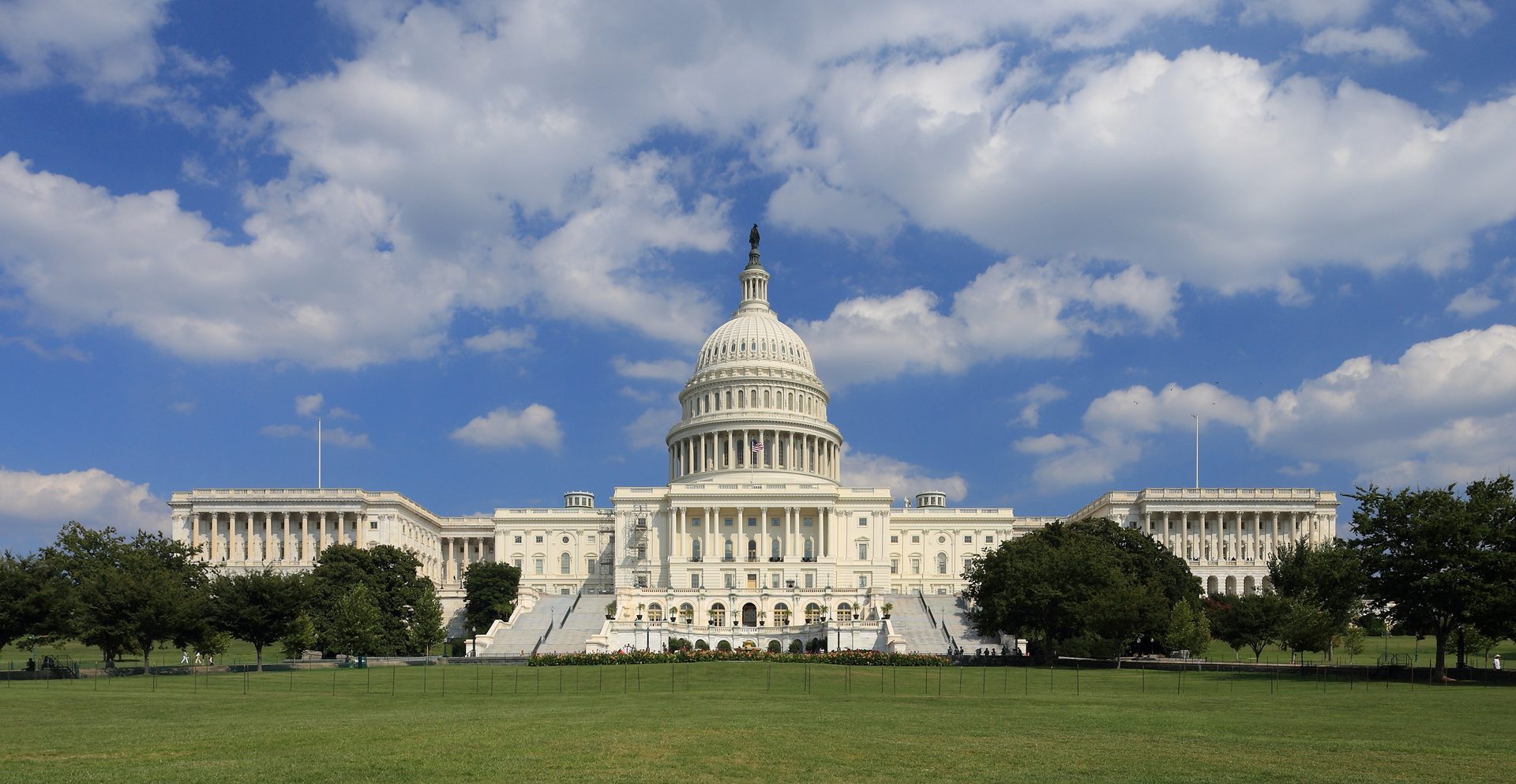
Washington Is Dismantling the Department of Education. States Are Inheriting the Consequences.
Subheadline: Eighteen months after the executive order, the agency is half its size, its functions scattered across Washington, and school leaders are learning what "returning education to the states" actually costs.
On March 20, 2025, flanked by schoolchildren seated at desks in the White House East Room, President Donald Trump signed the executive order he had promised on the campaign trail: directing Education Secretary Linda McMahon to "take all necessary steps to facilitate the closure of the Department of Education and return education authority to the States."
Eighteen months later, the department has not been — and legally cannot be — abolished by executive action. Only Congress can eliminate a federal agency created by statute, as this one was in 1979 under President Carter. But as the 2026–27 school year begins, the administration has done the next closest thing: it has hollowed the agency out, scattered its functions, and rewritten its mission. For America's 13,000+ school districts and 50 state education agencies, the question is no longer whether the federal footprint in education will shrink. It is what fills the space it leaves behind.
What has actually happened
The workforce first. Within weeks of the order, the department notified employees of plans to cut nearly half of its more than 4,000 staff and cancel leases for regional offices. The Supreme Court has since allowed the administration to continue workforce reductions while legal challenges proceed. An agency that administered student loans for 40 million borrowers, enforced civil rights in schools, and distributed Title I funds to high-poverty districts is now operating with a skeleton crew.
The functions second. Because the department cannot legally be closed without Congress, the administration has worked to redistribute its functions through interagency agreements — moving programs to other departments piecemeal. Student loan servicing, K–12 formula grants, and special education funding are being rehoused across the federal bureaucracy while the White House insists, in the order's own language, on "uninterrupted delivery of services, programs, and benefits on which Americans rely."
The mission third. The order bars any program receiving remaining department funds from promoting diversity, equity, and inclusion or "gender ideology." Education civil-rights advocates report that the Office for Civil Rights — historically the enforcement arm for discrimination complaints in schools — has been gutted, with severe staffing shortages crippling its ability to conduct the investigations the law requires. The administration's stated education priorities are now, in sequence: closing the department, expanding public funding for private schools, dismantling DEI policies at state and local levels, increasing artificial intelligence in education, and advancing "patriotic education."
The White House's public rationale leans on outcomes: since the department's creation in 1979, more than $3 trillion has been spent, the administration argues, while National Assessment of Educational Progress scores in math and reading have stagnated. "We're going to eliminate it, and everybody knows it's right," the President said at the signing.
What was promised to continue
The administration has been careful — and legally obliged — to promise continuity where the law demands it. Title I funding for high-poverty schools, funding for students with disabilities under the Individuals with Disabilities Education Act, Pell Grants, and federal student loans are all supposed to keep flowing, administered by whatever remains of the department or by the agencies absorbing its programs.
For school business officers and superintendents, that promise is the thing to watch most closely. Federal education dollars have always come with federal compliance machinery — reporting requirements, audit trails, civil-rights assurances, disbursement calendars. As programs migrate between agencies with depleted staff, the risk is not a dramatic cutoff but a slow degradation: delayed disbursements, unanswered guidance questions, investigations that never open. The first districts to feel it, advocates warn, will be the ones least able to absorb the shock — high-poverty districts and those serving students with disabilities.
The states inherit the work
"Return education authority to the states" sounds like devolution. In practice, states are inheriting obligations without the federal infrastructure that used to support them. State education agencies — many of them already thinly staffed — must now interpret shifting federal guidance, manage funding streams whose administrative home keeps changing, and make their own calls on civil-rights enforcement in an environment where the federal backstop is receding.
Some states welcome the freedom. Republican-led states are moving fastest to expand private-school choice programs with public funds, aligning with the administration's priorities. Others are building state-level guardrails to preserve the protections the federal government is abandoning — a divergence that is quietly producing two Americas of education civil rights.
For school leaders, the practical playbook for the next two years is defensive and unglamorous: diversify funding assumptions in multi-year budgets, document compliance as if the auditor is already late, build direct relationships with state agency contacts before you need them, and track which federal program office currently holds your grants — because the answer may change.
The global footnote
There is an international dimension American educators rarely discuss but foreign ministries watch closely. The same administration that is dismantling the Education Department announced in July 2025 that the United States will leave UNESCO — the UN's education, science, and culture agency — effective December 31, 2026. Taken together, the two moves signal a historic American retreat from both domestic and international education governance. Nature abhors a vacuum; in global education standard-setting, from AI ethics to workforce development frameworks, others are already filling it.
What education leaders should watch
Three things will determine how this story ends for schools.
First, the courts. The Supreme Court has permitted workforce reductions to proceed, but the underlying legal question — how far an executive can go in dismantling a congressionally created agency — is not settled. Each ruling redraws the map of what states must absorb.
Second, Congress. Full abolition requires legislation, and the votes are not there today. But appropriations are the quieter weapon: a department can be starved without being formally closed.
Third, the 2026 midterms and beyond. Federal education policy now swings violently with each administration. The leaders building resilient systems are the ones designing for policy volatility itself — funding models, compliance systems, and curricula that survive whoever holds the White House.
The department may or may not survive this decade. The students it was built to serve will still be in classrooms either way. That is the part no executive order can sign away.
DZY INFO covers US federal education policy and its impact on schools worldwide. Tips: news@dzy.info.

Stop Promoting Your Best Teachers Out of the Classroom
Lower School Head (Grades 3–6) — Holton-Arms School
Upper School Head — Winsor School
Stop Promoting Your Best Teachers Out of the Classroom

Aberdeen Council Chief Angela Scott Appointed to Lead University of Dundee’s Recovery as Principal and Vice-Chancellor

Angola Made French Compulsory in Primary School. The Hard Part Starts Now.
-
 Leadership2 weeks ago
Stop Promoting Your Best Teachers Out of the Classroom
-
 Appointments3 weeks ago
Aberdeen Council Chief Angela Scott Appointed to Lead University of Dundee’s Recovery as Principal and Vice-Chancellor
-
 News3 weeks ago
Angola Made French Compulsory in Primary School. The Hard Part Starts Now.
-

 Higher Education3 weeks ago
New Presidents, New Playbooks: What Two Leadership Transitions Say About Higher Ed’s Future
-

 News3 weeks ago
273 Million Children Out of School: UNESCO’s Warning the World Can’t Ignore
-

 Innovation3 weeks ago
The Tutor That Wasn’t: What the Khanmigo Experiment Really Proved About AI in Schools
-

 Interviews3 weeks ago
The Microsoft Engineer Who Built Africa’s Most Daring University: Patrick Awuah’s Bet on Ethical Leadership
-
 Appointments3 weeks ago
Pralhad Joshi Takes Additional Charge of India’s Education Ministry After Pradhan Resigns Over NEET Paper Leak